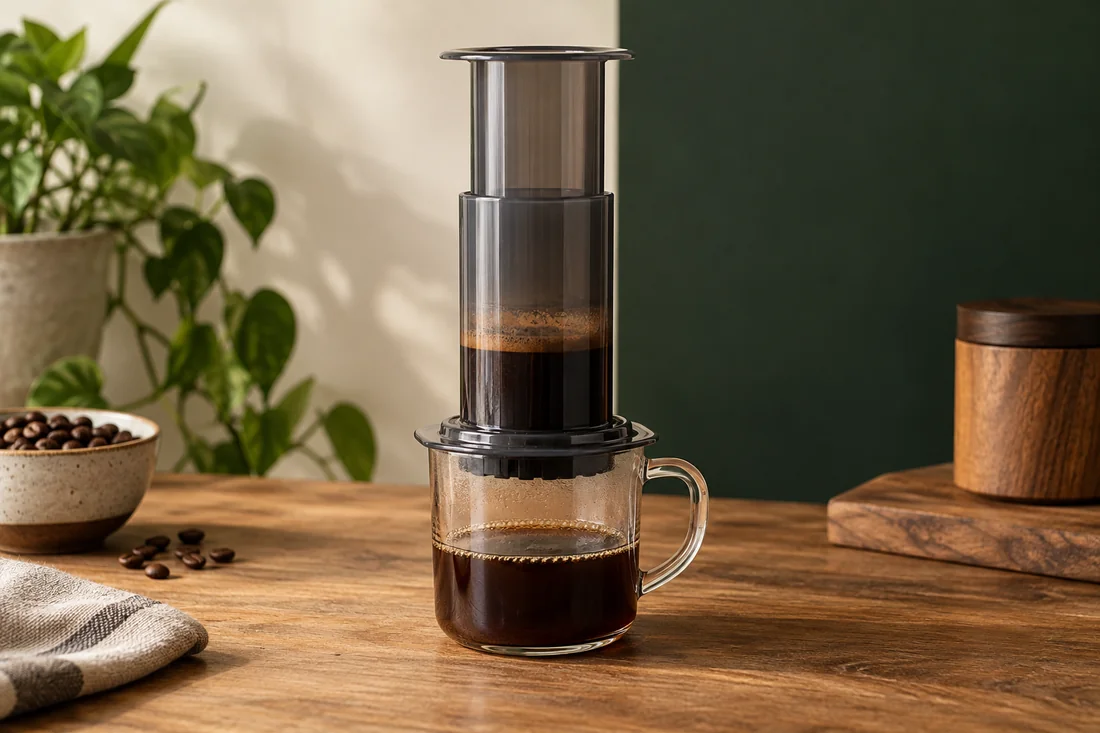
Schematic movement and illustrative AI images. Animations shorten the action; follow the quantities, wait times and safety guidance in the text.
If the flavour is not quite rounded yet
One change. A new attempt.
Pressing is difficult
Check grind size, filter, assembly and fill level; do not apply extra force.
Rounded but too intense
First dilute the finished coffee with warm water a portion at a time.
Why it works
The details behind the recipe.
What the AeroPress can do
With the AeroPress, coffee first steeps in water; you then use a plunger to push the drink through a filter. Paper retains fine grounds. The method also works for a concentrated brew that you dilute afterwards. It does not produce classic portafilter espresso: a hand press and an espresso machine operate under different brewing conditions.
Safe setup
The classic method stands upright on a stable, suitable cup. Check the manufacturer's approvals for the vessel and model. Thin or damaged glass, or an unstable surface, is not a suitable base for pressing. Inverted recipes, which involve turning the hot device over later, are unnecessary for this introduction.
As a starting point of your own: 15 grams of medium-fine ground coffee, 200 grams of hot water and around one minute of contact time before pressing. Use only a quantity that stays below your model's fill limit. Compare it with the instructions for your specific AeroPress model if needed.
Step by step
Place the specified filter paper in the filter cap and attach it correctly to the brewing cylinder.
Place the cylinder on the stable cup. Add the coffee and carefully pour in the weighed amount of water.
Stir briefly to wet any dry grounds. Leave the mixture to steep for your chosen time.
Insert the plunger straight and press slowly with gentle, even pressure. If resistance is strong, do not press harder.
Stir the finished coffee. Taste it and, if desired, add hot water in portions.
Separate flavour and dilution
If your coffee tastes rounded but too intense, adding water to the finished cup is the direct approach. This changes the concentration without rebuilding the entire brewing recipe. If it tastes both thin and sharp, however, extra water probably will not solve the underlying problem. Try a comparison with slightly finer grounds or a longer steep instead.
Record water added for dilution separately from brewing water. Otherwise, a lucky result will not become a repeatable recipe. For example: pouring in 200 grams and adding 40 grams afterwards are two different steps, not simply a 240-gram pour.
If pressing is difficult
Check the grind, fill quantity, correct filter and assembly. Very fine grounds can create considerable resistance. Do not try to overcome a blocked brewer with your body weight. Release the pressure and follow the manufacturer's instructions for safe handling. Hot coffee belongs in the cup, not on your hands.
On the road and afterwards
For travel, a few pre-portioned beans and matching paper filters are practical. A sturdy cup matters more than the last gram of luggage. Let the brewer and its contents cool sufficiently before taking it apart. Dispose of the puck and clean the parts according to the instructions. Packed dry, the brewer will make a much nicer start to the next morning.
Frequently asked
Another question?
Is this espresso?
It can be an intense little coffee, but not espresso made under the conditions of a portafilter machine.
Do I need to press particularly hard?
No. Gentle pressure is enough; stop if resistance is strong and check the cause.