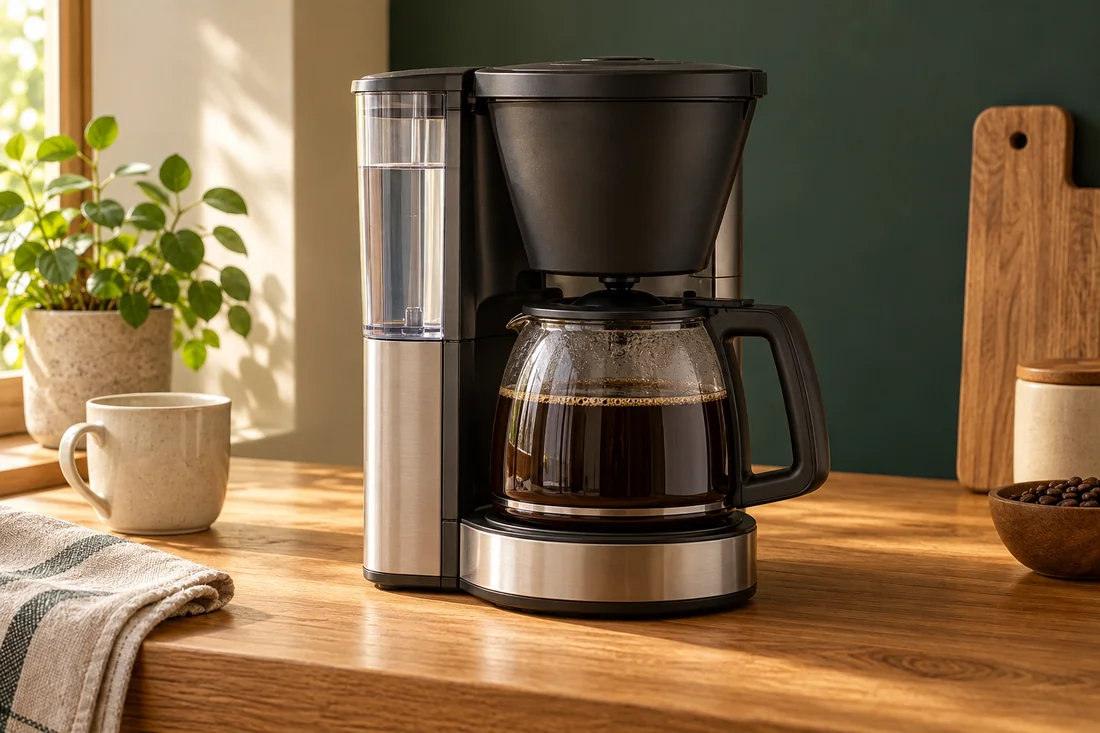
Schematic movement and illustrative AI images. Animations shorten the action; follow the quantities, wait times and safety guidance in the text.
If the flavour is not quite rounded yet
One change. A new attempt.
Thin and lacking aroma
Check dose and even wetting; change only one setting on the next attempt.
Flow stalls or jug is missing
Check basket, pot, filter and drip stop according to the appliance manual.
Why it works
The details behind the recipe.
Automatic does not mean anything goes
A filter coffee machine handles pouring and largely controls the water flow itself. This makes brewing several cups easier. You still decide how much coffee meets how much water. Weighing makes that decision repeatable: a heaped scoop can vary each time, and different beans do not necessarily weigh the same at the same volume.
Start with the water quantity
The tank scale is not a universal mug size. Check what a cup means for your model. Moccamaster’s US help pages, for example, suggest 55 grams of coffee per litre of water as a starting point and recommend weighing. This figure is not an obligation: you may prefer a stronger recipe.
Start with a quantity your model is designed to handle. A large machine may not perform equally well with a tiny portion. If it has a half-pot mode, use it according to the instructions. A manual drip stop must be in the correct position before normal brewing.
Steps for your first comparison pot
Fill with fresh drinking water to the desired mark. Use the water temperature specified by the manufacturer for the tank.
Insert the correct filter size. Weigh the coffee and start with a medium grind suitable for filter brewing.
Distribute the grounds evenly in the filter basket. Fully insert the basket and pot, and check the flow.
Start the machine and let the brewing cycle finish before removing the jug.
Mix the finished coffee by gently swirling or stirring, and taste a small portion.
What you can sensibly change
If the coffee is balanced but too intense, first try adding a little hot water to your cup. This helps you check whether strength is really the issue. If the cup is thin and lacks aroma, first check that you dosed correctly and that the coffee bed was wetted evenly.
Do not change dose, grind and bean simultaneously. For a clear second attempt, keep the water quantity the same. Choose, for example, a little more coffee or a small grind adjustment. Note the change directly on the bean bag or on your phone.
Keeping warm without an endless cycle
A hotplate is handy, but freshly brewed coffee changes when left standing for a long time. Plan suitable batches rather than one big pot for many hours. Preheating a vacuum flask helps without adding more heat later. Pay attention to the material and to cleaning the lid; coffee residue likes to linger there.
Cleaning is part of the recipe
A clean jug and filter basket prevent old residue from accompanying every new bean. Descaling and cleaning are different tasks: limescale and coffee oils require different procedures approved by the manufacturer. Do not put homemade cleaning mixtures in the tank. Follow the instructions and the dosage for the specified product.
Frequently asked
Another question?
How much coffee for half a litre?
The Moccamaster table mentioned gives around 28 grams as a starting point. Adjust to taste.
Why does a small portion taste different?
Water distribution and bed depth change. Use an appropriate quantity for the brewer or a single-cup brewer.