
Basics · 3 MIN READ

Storing beans

Dry, tightly sealed and away from heat: a simple routine protects your beans day to day.

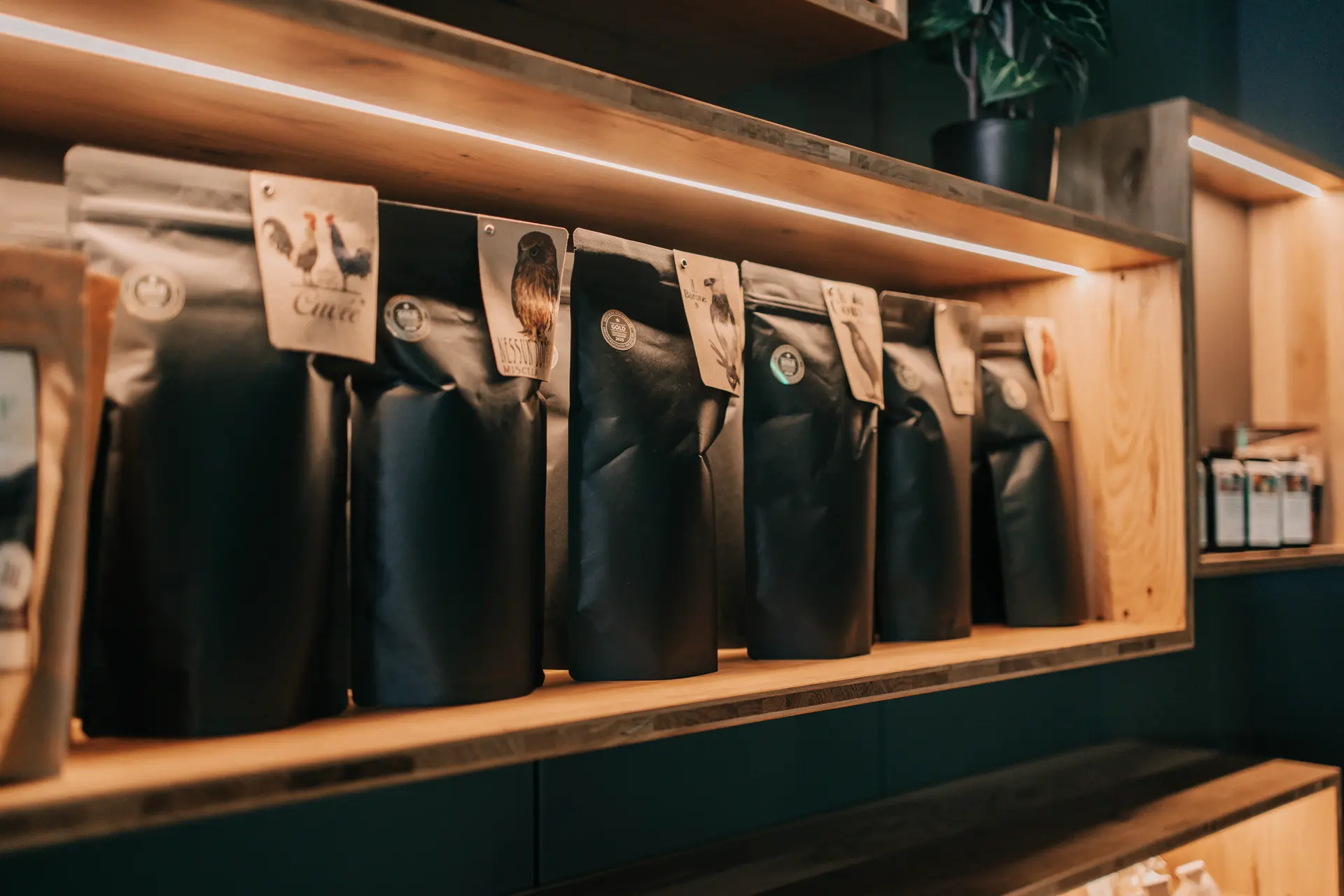
Coffee bags on an illuminated shelf

Knowledge you can explore

Your container needs a good home

Three views make the relationship visible. Choose a question, compare the diagram and check your understanding.

Keep away from heat and moistureOxygen, moisture and heat influence ageing. A suitable bag that seals well can therefore work better than a decorative jar in the sun. Keep coffee dry and away from hot equipment. A special container cannot replace a good location or clean, dry handling in everyday use.01 / 03
  1. Well sealedWell sealed
  2. Dry, away from heatDry, away from heat
  3. Location helps protectLocation helps protect

Scroll the diagram sideways to read every label.

Store dry, seal well

Schematic illustration · not a measurement or real-time demonstration

01 / 03

Keep away from heat and moisture

Oxygen, moisture and heat influence ageing. A suitable bag that seals well can therefore work better than a decorative jar in the sun. Keep coffee dry and away from hot equipment. A special container cannot replace a good location or clean, dry handling in everyday use.

02 / 03

Leave the reserve undisturbed

Keep a manageable working quantity ready and seal the remaining coffee well. Label containers with the beans, roast date and opening date. Avoid continually topping old leftovers up with new beans. This keeps age and recipes understandable without opening your entire reserve for every single cup.

03 / 03

Cold storage needs careful handling

A refrigerator container opened daily can expose coffee to moisture and unwanted smells. Freezing is a separate approach using small, tightly packed portions. Avoid repeated temperature changes and condensation on exposed beans. Check your grinder’s instructions before grinding frozen beans rather than treating cold as an automatic freshness guarantee.

A quick thought check

What is a sensible simple storage routine?

01

The main everyday enemies

Oxygen, moisture and heat drive the ageing of roasted coffee. Good storage limits these influences with suitable packaging, a dry location and manageable quantities. Specialist accessories are not the first requirement. Even the best container cannot fully compensate for a warm spot next to the stove or espresso machine.

The SCA literature review describes several factors influencing ageing. It does not establish a fixed shelf life for every bag. Roast, packaging and storage differ. What matters is how you treat the amount you have actually opened.

02

A simple routine

Store coffee in suitable packaging that closes securely or in a clean container. Reduce unnecessarily frequent opening and do not leave beans standing open indefinitely. Use a dry spoon and keep steam away from the opening.

If the original bag has a reliable closure, it can be very practical. Do not transfer beans into a large jar purely for appearances and then place it in the sun. A small dark cupboard often meets more of your needs than a decorative spot on the machine.

03

Portion it instead of moving everything daily

  1. Estimate your consumption realistically for the coming period.
  2. Keep a manageable working quantity ready and seal the remaining coffee well.
  3. Label containers with bean, roast date and opening date.
  4. Avoid constantly topping up old leftovers with fresh stock.
04

Distinguish fridge and freezer

A bean container opened daily in the fridge can make moisture and other odours a problem. Constantly taking it out, opening it and putting it back is not a well-planned freshness routine.

Freezing is a topic of its own: research describes slower ageing at low temperatures, but practical packaging and handling remain crucial. If you experiment with it, use small, tightly sealed portions and avoid repeated temperature changes and condensation on exposed beans. Also check your grinder’s guidance before grinding frozen beans.

05

Tin or bag?

Compare more than marketing words such as vacuum or aroma. Ask whether the closure is reliable, whether you can clean and dry the container properly, and whether its size suits your consumption. A tin smelling of old coffee is no improvement over a fresh, suitable bag.

06

Give ground coffee particular care

If you work without a grinder, favour smaller bags. Close them immediately after taking coffee out. Pre-ground coffee is no reason to forgo good flavour; it simply calls for realistic quantity planning.

07

When storage becomes a matter of taste

Note whether the last servings from a pack regularly seem much weaker than the first. If so, a smaller pack or better portioning are concrete options. More grounds may increase intensity, but cannot reliably replace lost aromatic variety.

Frequently asked

Another question?

Do I really need a vacuum container?

No. A suitable quantity, a good seal and a dry, cool place are the foundation.

Should I pour new beans onto old leftovers?

It is better to use them separately so age and recipe remain clear.

Sources & further reading

Related to this topic

Check the open bag

Check the closure, location and working quantity of your open bag. Then observe how aroma and taste develop over time.

Frischeentwicklung verstehen ↗

Your coffee helper

Coffee Bro.

I help you brew, find coffee knowledge and show you what is on the menu. Your questions stay here in your browser.

Local content & guided help · no connected language model