
Coffee Brothers Practice · 3 MIN READ

Improving a recipe

A clear observation and a measured recipe make advice specific. Here is how to prepare a useful comparison.

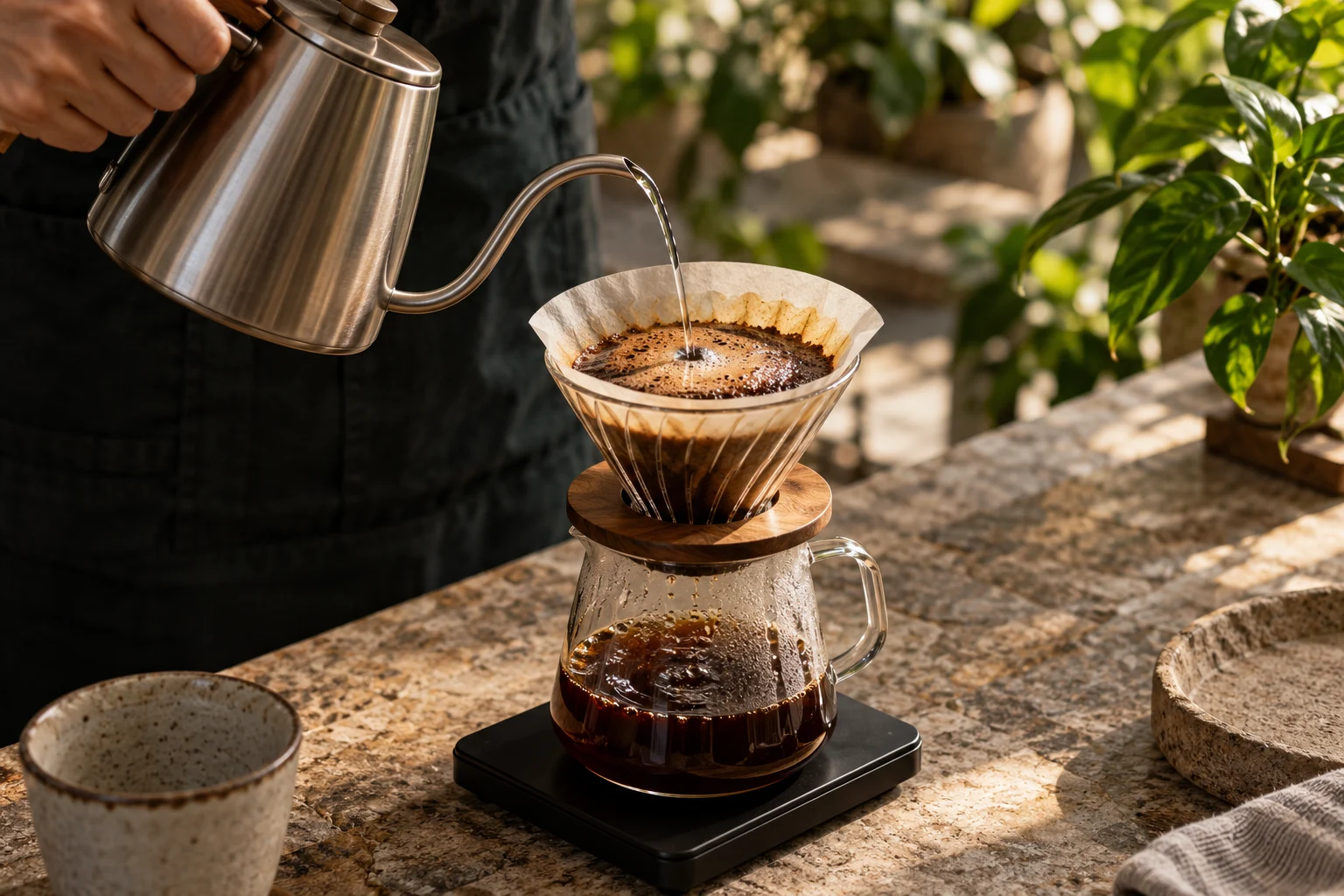
Water being poured into a hand filter on a scale

Knowledge you can explore

One observation, one trial

Three views make the relationship visible. Choose a question, compare the diagram and check your understanding.

Separate cup and processToo thin, sharp or dry in the finish says more than tastes wrong. Add bean, method, dose, water or beverage mass, grind and time definition. A fast shot is a process clue, not a complete flavour judgement. A photograph of the packaging often helps more than the finished cup alone.01 / 030102
  1. Taste impressionTaste impression
  2. Recipe and processRecipe and process
  3. Record both separatelyRecord both separately

Scroll the diagram sideways to read every label.

Record impression plus recipe

Schematic illustration · not a measurement or real-time demonstration

01 / 03

Separate cup and process

Too thin, sharp or dry in the finish says more than tastes wrong. Add bean, method, dose, water or beverage mass, grind and time definition. A fast shot is a process clue, not a complete flavour judgement. A photograph of the packaging often helps more than the finished cup alone.

02 / 03

Choose one deliberate change

For a concentrated, unpleasantly sharp espresso, a larger beverage mass at the same dose could be a trial. This is a hypothesis, not a remote diagnosis. Do not change grind, temperature and water together. Record the change’s intended goal and what you actually notice with the next sip.

03 / 03

Repeat the promising trial

Repeat a promising setting. If results vary strongly, first check repeatability, including scale, distribution, equipment warmth and consistent steps. Otherwise you may be chasing chance. Record unsuccessful trials too. Leaks or electrical problems require service; a conversation about flavour does not replace safe repair.

A quick thought check

Your changed recipe tastes better once. What is the next useful trial?

01

Describe the cup first

Instead of tastes wrong, a specific observation helps: too sour, a dry finish, too thin or pleasant only with lots of milk. If words fail you, describe the moment: the first sip is fine, but afterwards a rough feeling remains. That is already useful information.

Also separate flavour from process. A fast shot is an observation, not a complete verdict. It may taste good. Conversely, a lovely slow shot can taste unpleasant. We want to improve the drink, not just a video of it flowing out.

02

Bring these details

Record the bean, method, dose, water quantity or beverage mass, grind setting and definition of time. With espresso, it matters whether you measure from pump start. For filter coffee, the filter and pouring sequence also matter. Add whether the problem appeared suddenly or has existed from the start.

A photo of the packaging and the exact model name can reduce follow-up questions. A cup photo alone says little about extraction. Add the measurements and describe whether you tasted the coffee black or with milk. Different equipment commonly needs different settings. The aim of the conversation is a useful experiment for your setup, rather than copying someone else’s grinder number.

03

Choose a hypothesis

Suppose your espresso is very concentrated and also unpleasantly sharp. One possible experiment is a slightly larger drink yield with the same dose. This is a hypothesis, not a remote diagnosis. If the flavour improves, you have a direction. If not, record that result too.

With filter coffee, the question might be whether a slightly different grind helps. Do not change water, temperature and pouring pattern at the same time. A useful comparison needs enough consistency to make the difference interpretable. Perfect laboratory conditions are unnecessary; a clear process is essential.

04

Repeat before adjusting again

Brew a promising setting again. If two identical attempts vary greatly, your next task may be repeatability. Check the scales, distribution, equipment temperature and clean working steps before inventing a new target number.

Only once a result becomes more stable is finer flavour adjustment worthwhile. Otherwise, you are chasing chance. A brief log often saves beans because you do not start from scratch after every attempt.

05

Help with realistic limits

A conversation can give you a next step, but cannot identify every machine fault remotely. Leaks, electrical problems or unusual mechanical noises call for the relevant service team. A flavour adjustment does not replace a safe repair.

Even a recommendation is no promise that a particular number will work everywhere. Record what it aims to achieve and how you plan to check the result. This keeps collaboration concrete: one observation, one change, another sip. And once the cup tastes good, you are allowed to stop optimising.

Frequently asked

Another question?

Which information helps most with a question?

A specific taste impression along with the bean, method and measured quantities.

Should I change several settings at once?

Better not when troubleshooting. One targeted change makes the result easier to understand.

Sources & further reading

Related to this topic

Continue with a clear question

Have your recipe and tasting notes ready. In the Coffee Lab, use them to choose one adjustment for the next attempt.

Rezept im Kaffee-Labor erkunden ↗

Your coffee helper

Coffee Bro.

I help you brew, find coffee knowledge and show you what is on the menu. Your questions stay here in your browser.

Local content & guided help · no connected language model