
Describe the cup first
Instead of tastes wrong, a specific observation helps: too sour, a dry finish, too thin or pleasant only with lots of milk. If words fail you, describe the moment: the first sip is fine, but afterwards a rough feeling remains. That is already useful information.
Also separate flavour from process. A fast shot is an observation, not a complete verdict. It may taste good. Conversely, a lovely slow shot can taste unpleasant. We want to improve the drink, not just a video of it flowing out.
Bring these details
Record the bean, method, dose, water quantity or beverage mass, grind setting and definition of time. With espresso, it matters whether you measure from pump start. For filter coffee, the filter and pouring sequence also matter. Add whether the problem appeared suddenly or has existed from the start.
A photo of the packaging and the exact model name can reduce follow-up questions. A cup photo alone says little about extraction. Add the measurements and describe whether you tasted the coffee black or with milk. Different equipment commonly needs different settings. The aim of the conversation is a useful experiment for your setup, rather than copying someone else’s grinder number.
Choose a hypothesis
Suppose your espresso is very concentrated and also unpleasantly sharp. One possible experiment is a slightly larger drink yield with the same dose. This is a hypothesis, not a remote diagnosis. If the flavour improves, you have a direction. If not, record that result too.
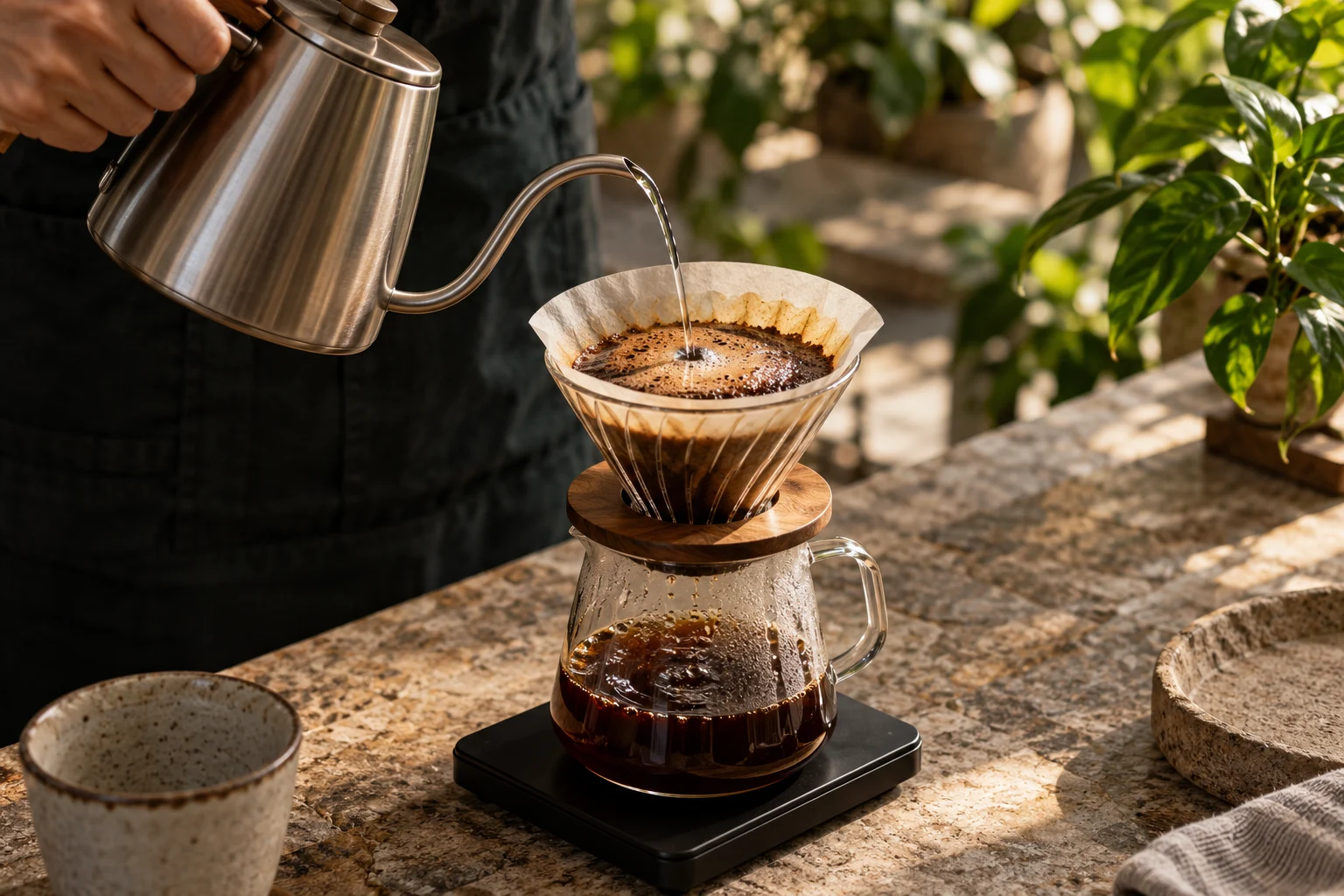
With filter coffee, the question might be whether a slightly different grind helps. Do not change water, temperature and pouring pattern at the same time. A useful comparison needs enough consistency to make the difference interpretable. Perfect laboratory conditions are unnecessary; a clear process is essential.
Repeat before adjusting again
Brew a promising setting again. If two identical attempts vary greatly, your next task may be repeatability. Check the scales, distribution, equipment temperature and clean working steps before inventing a new target number.
Only once a result becomes more stable is finer flavour adjustment worthwhile. Otherwise, you are chasing chance. A brief log often saves beans because you do not start from scratch after every attempt.
Help with realistic limits
A conversation can give you a next step, but cannot identify every machine fault remotely. Leaks, electrical problems or unusual mechanical noises call for the relevant service team. A flavour adjustment does not replace a safe repair.
Even a recommendation is no promise that a particular number will work everywhere. Record what it aims to achieve and how you plan to check the result. This keeps collaboration concrete: one observation, one change, another sip. And once the cup tastes good, you are allowed to stop optimising.