
Basics · 3 MIN READ

Extraction

Water dissolves components from the grounds. The amount and evenness of extraction explain more than brewing time alone.

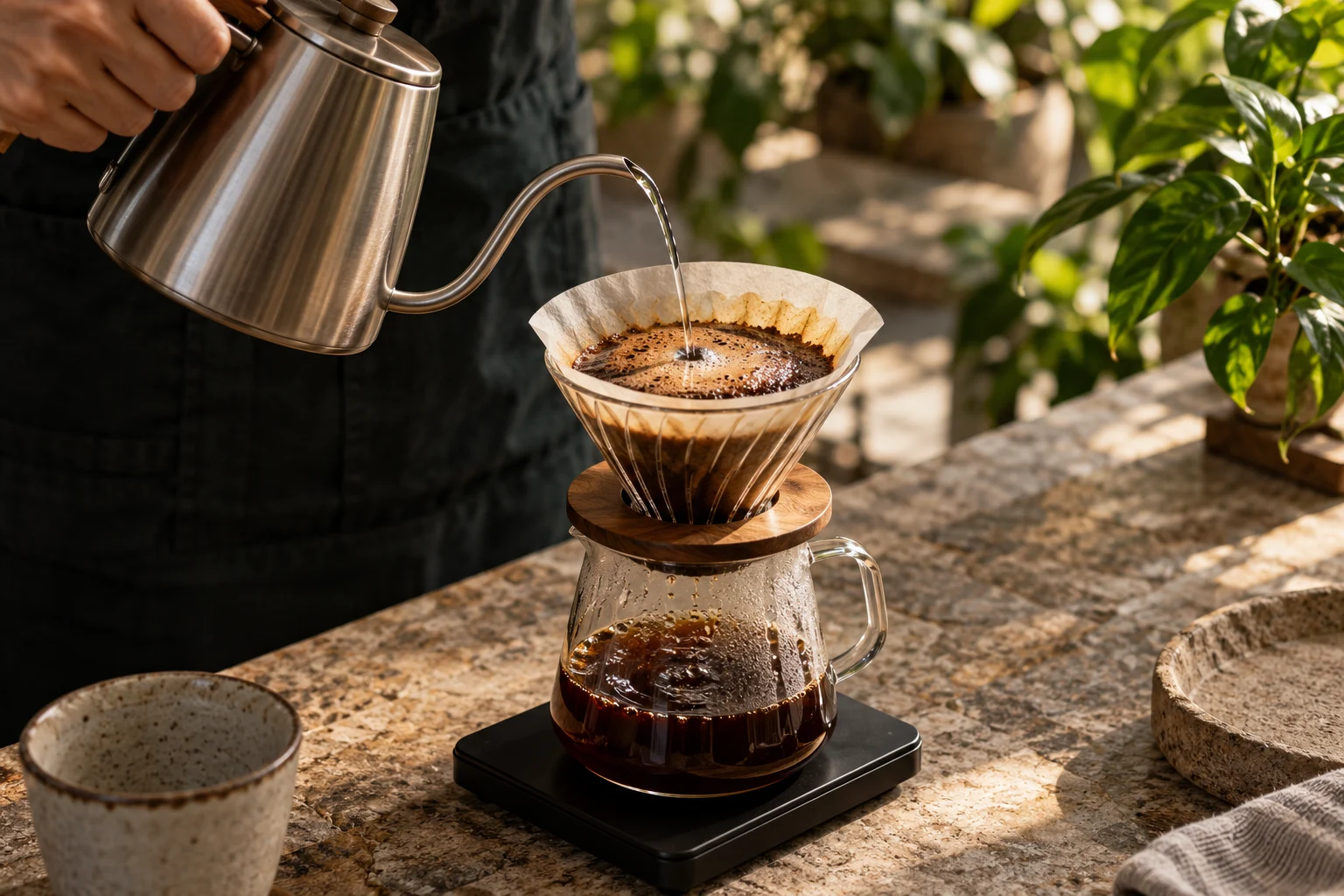
Water being poured into a manual coffee filter

Knowledge you can explore

What leaves the bean?

Three views make the relationship visible. Choose a question, compare the diagram and check your understanding.

Water carries some material awayWater dissolves components from ground coffee. Some then shape aroma, taste and body, while other material remains in the wet grounds. How much dissolves depends on the interaction of grind, water, temperature, movement and contact time. Brewing time alone cannot explain the result in your cup.01 / 03
  1. Water through groundsWater through grounds
  2. Dissolved in the cupDissolved in the cup
  3. Grounds remainGrounds remain

Scroll the diagram sideways to read every label.

Some stays in the grounds

Schematic illustration · not a measurement or real-time demonstration

01 / 03

Water carries some material away

Water dissolves components from ground coffee. Some then shape aroma, taste and body, while other material remains in the wet grounds. How much dissolves depends on the interaction of grind, water, temperature, movement and contact time. Brewing time alone cannot explain the result in your cup.

02 / 03

Same time, different routes

In a flow-through brewer, water can take preferred routes through the bed. Some areas then receive more flow than others. Even wetting and careful preparation can help more than forcing a particular brewing time. Acidity or bitterness alone cannot establish a particular extraction level in your cup.

03 / 03

Water afterwards changes strength

Take a small sample of finished coffee and dilute it. Without contact with the grounds, this does not dissolve anything more from the coffee. If the sample becomes more pleasant, concentration may have contributed to the problem. Then examine the brewing process or the beans if needed.

A quick thought check

You add water to coffee with no grounds present. What changes directly?

Explore the numbers and controls

04 / Strength is not extraction

3 gdissolved solids stay the same

Worked example · not a measurement of your coffee

A moment of discovery in the cup

More water.
Less intense.

Our example starts with 200 g of finished coffee and a calculated 3 g of dissolved substances. The grounds have already been removed.

200 gTotal beverage
1,5 %Concentration

Diluted. Not extracted again.

The same 3 g are spread through more drink. No further substances are dissolved from coffee because no grounds remain.

This lets you check whether intensity is your main concern. The calculation does not predict which cup you will prefer.

Distinguishing strength and extraction ↗
01

The essentials without laboratory language

Extraction is the process in which water dissolves soluble components from ground coffee. These substances shape the drink’s taste and aroma. The bean does not dissolve completely: a large part remains as grounds. For a good cup, both the amount dissolved and how evenly water reaches the grounds matter.

How much dissolves and how evenly it happens depends on the entire process. Water, grind, temperature, contact time and agitation interact. This is why the same brewing time with different equipment can produce noticeably different cups.

02

More is not automatically better

The aim is not to dissolve as much as possible for as long as possible, but to get a result you enjoy. The common idea of a neatly separated sequence of acidity first, then sweetness and finally bitterness is too simplistic in practice. Substances dissolve at overlapping stages, and the roast and bean bring their own characteristics too.

A sour cup is therefore not automatically under-extracted. Nor does a bitter cup prove over-extraction. Both may also be influenced by the raw material, high concentration or uneven water flow.

03

Strength is a different question

Strength describes concentration in the drink. You can dilute a well-balanced brewed coffee with water afterwards. It becomes weaker without that water dissolving anything further from grounds that have already been removed. This distinction is enormously helpful when troubleshooting.

A calculation example: 200 grams of drink could contain three grams of dissolved substances. The concentration would then be 1.5 per cent. If you add 100 grams of water, those same three grams are spread across 300 grams, or 1 per cent. This is simply a quantity calculation, not a measurement of your coffee.

04

Evenness in the coffee bed

In a percolation method, water can take preferred paths. Some areas receive heavy flow, others little. An average value is then not enough to explain the cup fully. Even wetting and careful preparation are therefore often more helpful than trying to force a particular number.

05

Check strength with a small sample

  1. Brew a cup using a recorded recipe and taste it at a pleasant temperature.
  2. Set some aside and dilute it with a small, weighed amount of water.
  3. Compare whether intensity was your main problem or whether the unpleasant impression remains.
  4. Only on the next brew, deliberately change grind or contact time while keeping the other variables fixed.
06

What research puts into perspective

The SCA describes studies in which strength and extraction level explained important differences in perception. This does not mean there is one perfect combination for everyone. The most valuable everyday lesson is to separate questions of intensity, balance and personal preference.

If your recipe tastes good and is repeatable, you do not need to guess a supposedly ideal extraction percentage without a measuring device.

Frequently asked

Another question?

Can I taste extraction?

You can notice clues, but cannot reliably taste an exact percentage.

Does brewing longer always help with acidity?

No. Also check the bean, strength and evenness.

Sources & further reading

Related to this topic

Check concentration first

Dilute a small sample. Then assess whether intensity was the issue or whether you want to adjust the brewing process.

Stärke von Extraktion trennen ↗

Your coffee helper

Coffee Bro.

I help you brew, find coffee knowledge and show you what is on the menu. Your questions stay here in your browser.

Local content & guided help · no connected language model