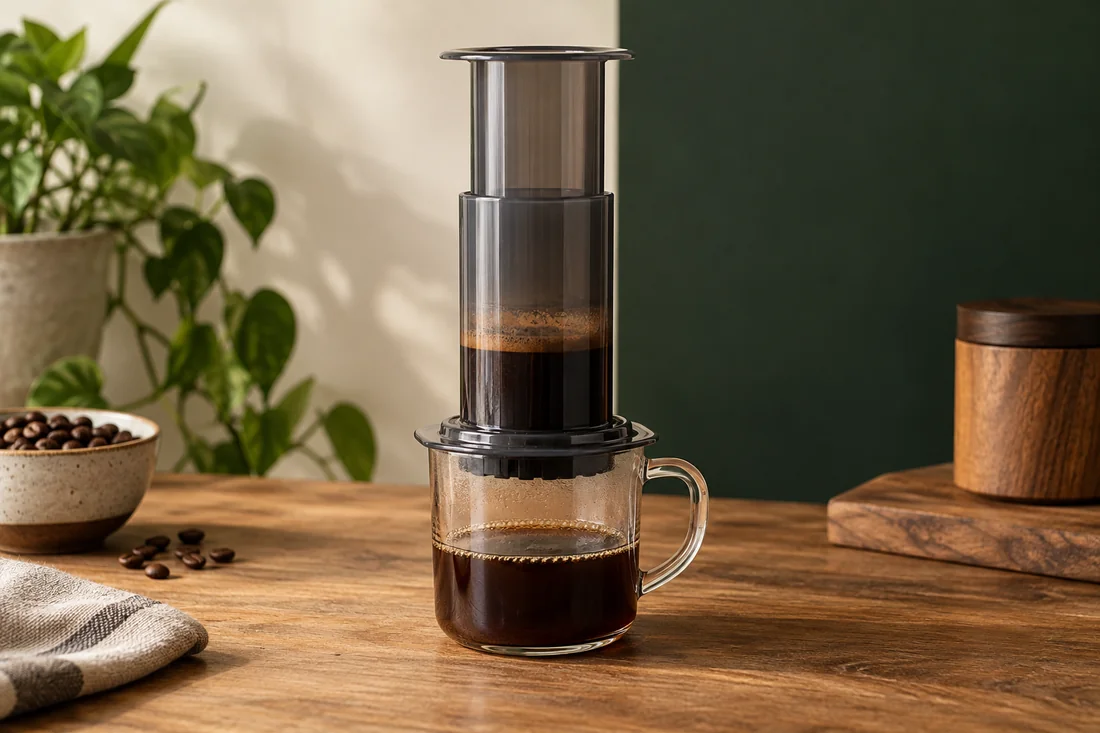
Schematic movement and illustrative AI images. Animations shorten the action; follow the quantities, wait times and safety guidance in the text.
If the flavour is not quite rounded yet
One change. A new attempt.
Recipe tastes different when travelling
Compare suitable drinking water before changing everything about the grind.
No safe surface
Postpone brewing rather than balancing with hot water.
Why it works
The details behind the recipe.
What really matters on the road
A good travel kit starts with three practical questions: where will safe hot water come from, what will support the brewer securely, and how will you dispose of the grounds and clean the equipment? At home, the kitchen answers much of this automatically. On the road, the workflow determines which method suits you and which accessories you really need.
A small pour-over dripper may suit a hotel stay. A robust press is practical in a small space. The classic upright AeroPress does, however, need a stable, suitable cup to press into. Camping also brings wind, uneven surfaces and safe operation of the heat source into play. No coffee recipe justifies an unsafe stove inside a closed tent.
Pack according to your process
Consider how many portions you actually need. Small portions of beans in suitable airtight containers save daily weighing. Label them with the recipe. If you travel without a grinder, have the coffee ground appropriately and choose manageable quantities. This is often better than taking an unsuitable grinder purely on principle.
Take suitable filters with you. A brewer without its required consumables is surprisingly decorative and not very useful on the road. A clean cloth, a bag for the grounds and a suitable transport vessel bridge the gap between brewing and moving on.
Rehearse the travel kit at home
Put together exactly the kit you will take along. Mentally hide everything else in your kitchen.
Brew one portion using only these parts. Use your recorded recipe.
Measure how much water you need, including preheating and cleaning.
Clean the kit and check how you can let it dry completely.
Remove everything you did not use, and add only parts that are genuinely missing.
Improvising without scales
If weight or space rules out scales, measure your portions beforehand. Mark a known amount of water on a suitable cup. This is less precise than weighing, but much easier to follow than adding a different mound of coffee by eye every morning.
Do not confuse pot capacity with actual brewing-water quantity. A travel cup filled to the brim leaves no space for the press or safe carrying. Allow some spare room. With an AeroPress, follow the fill limits and manufacturer’s guidance.
When the water tastes different
When travelling, more than the beans often changes. Water may have more minerals or a noticeably different smell. Use only suitable drinking water. If the result seems unfamiliar, do not change all the grinder settings at once. Comparing with another suitable water can show whether that is the cause.
Enjoyment rather than a luggage inspection
You do not need to recreate a complete coffee bar when travelling. A simple, repeatable recipe and a safe surface go a long way. If the surroundings are unsuitable, a local coffee is a better choice than an improvised hot balancing act. Good coffee rituals can adapt to the day.
Frequently asked
Another question?
Which method is best for travelling?
The one for which you can safely arrange water, a stable surface and cleaning. There is no universal winner.
Can I pre-portion coffee?
Yes. Label the portions and pack them dry and tightly sealed.