The guide · Multiple servings

Coffee for guests

Cup size and equipment limits determine the batches, not the number on the bag.

Recipe, techniques and troubleshooting. All on one page.

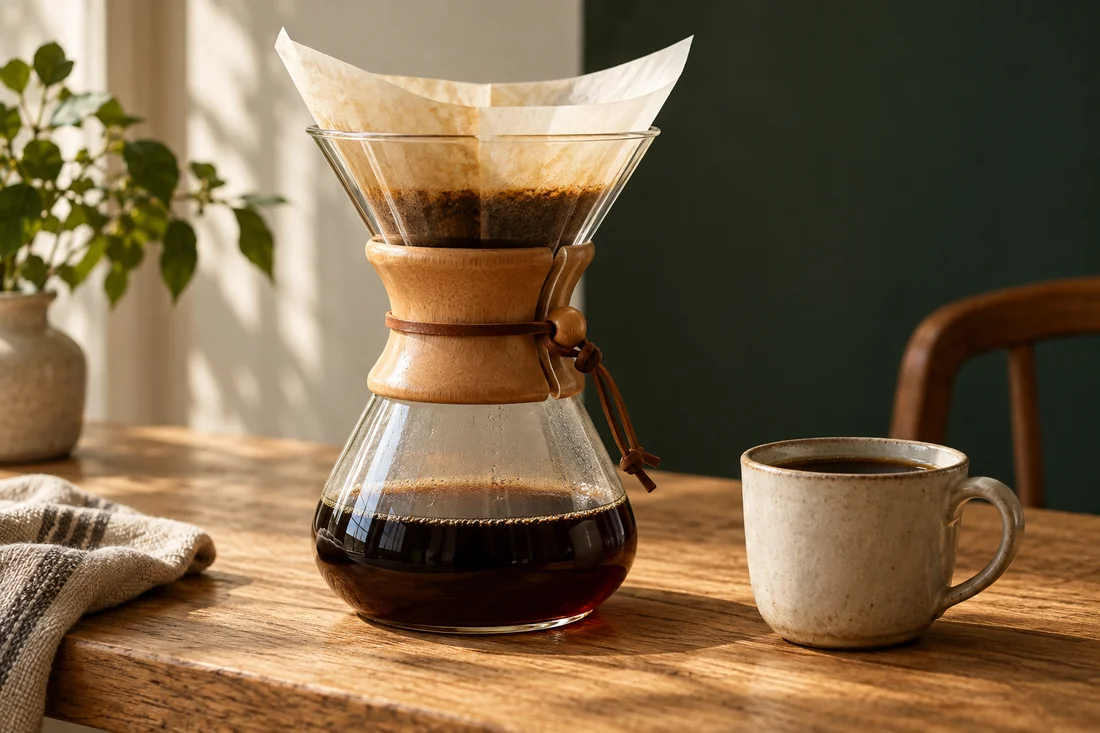
Multiple servings – illustrative image

Your starting recipe

Your cup starts here.

A starting point for your beans and your taste.

Planning
Cup size first
Guidance
55 g coffee / 1 l water
Capacity
Respect equipment limits
Serving
Mix the carafe

What you need

Have these ready.

Tick off what is ready. You can start at any time.

Now it is time to make coffee

How it works.
Step by step.

Get an overview first. Then work through each action at your own pace.

Planning
Cup size first
Guidance
55 g coffee / 1 l water
Stopwatch00:00

The stopwatch starts only when you tap Start. It continues counting across page changes if your browser allows storage. No alarm.

Understand the technique

Are equipment and supplies ready?

Coffee for guests: Clean the equipment – illustrated techniqueClean the jug and brewer. Check the filter, water and that you have enough beans.AResidue removed

A · What to observeClean carafe, fitting filter, water and enough beans are ready.

Check the beans
100 %

You start the motion. A shortened illustration, not a brewing timer.

01

Step 1 of 5

Clean the equipment

Clean the jug and brewer. Check the filter, water and that you have enough beans.

Understand the technique

Does each batch fit the equipment?

Coffee for guests: Plan and weigh the batches – illustrated techniqueDecide your batch size and weigh out the beans in advance for the planned rounds.ASuitable batches

A · What to observeDemand is divided into suitable, preweighed batches.

Preweigh the beans
100 %

You start the motion. A shortened illustration, not a brewing timer.

02

Step 2 of 5

Plan and weigh the batches

Decide your batch size and weigh out the beans in advance for the planned rounds.

Help with this step

Water in the grounds means brewing water and finished beverage yield are not identical.

Understand the technique

Is the thermal carafe ready to fill?

Coffee for guests: Prepare the insulated flask – illustrated techniquePreheat a suitable flask and the desired cups if needed.APreheat, then empty

A · What to observeA suitable carafe is preheated and emptied before coffee enters.

Preheat if needed
100 %

You start the motion. A shortened illustration, not a brewing timer.

03

Step 3 of 5

Prepare the insulated flask

Preheat a suitable flask and the desired cups if needed.

Understand the technique

Do guests receive the same mixture?

Coffee for guests: Brew fresh and mix – illustrated techniqueBrew shortly before serving. Mix each finished jug before sharing it out.AMix before serving

A · What to observeThe finished carafe is mixed before serving.

Distribute only after mixing
100 %

You start the motion. A shortened illustration, not a brewing timer.

04

Step 4 of 5

Brew fresh and mix

Brew shortly before serving. Mix each finished jug before sharing it out.

Help with this step

Swirl or stir before serving so portions are comparable.

Understand the technique

When is the next batch needed?

Coffee for guests: Brew another batch as needed – illustrated techniqueStart the next batch as needed rather than making a huge quantity in advance early on.ASuitable batches

A · What to observeThe next fresh batch follows actual demand.

Serve a fresh portion
100 %

You start the motion. A shortened illustration, not a brewing timer.

05

Step 5 of 5

Brew another batch as needed

Start the next batch as needed rather than making a huge quantity in advance early on.

Help with this step

Do not thoughtlessly mix freshly brewed coffee with old leftovers.

Schematic movement and illustrative AI images. Animations shorten the action; follow the quantities, wait times and safety guidance in the text.

If the flavour is not quite rounded yet

One change.
A new attempt.

Not enough coffee

Next time, note actual cup volumes and finished yield.

First and last cups taste different

Gently mix the finished jug before sharing it out.

Why it works

The details behind the recipe.

First the cups, then the beans

Plan coffee around the portions you actually want to serve. Six guests having about 200 millilitres each need roughly 1.2 litres of finished drink. You need more brewing water because some stays in the grounds. Also allow for refills and equipment capacity. A sensible reserve or a second batch is more reliable than the cup count on the box.

The appliance sets the limit

A one-litre machine does not become a two-litre machine through optimistic planning. Exceed neither tank nor filter capacity. Even a large French press needs space below the rim. For many guests, two clean, manageable batches are usually easier to control than a setup filled to the brim.

Scales help with dosing. The Moccamaster table gives 55 grams of coffee per litre of water as a guide. You can plan with your own tried-and-tested ratio; what matters is using it consistently. Work out the beans for each batch in advance so you do not have to improvise while your guests are there.

Preparation before the doorbell rings
  1. Clean the jug and brewer. Check the filter, water and that you have enough beans.
  2. Decide your batch size and weigh out the beans in advance for the planned rounds.
  3. Preheat a suitable flask and the desired cups if needed.
  4. Brew shortly before serving. Mix each finished jug before sharing it out.
  5. Start the next batch as needed rather than making a huge quantity in advance early on.
Pour evenly

If you pour several cups from one pot, gently swirl or stir it first. The first and last parts of a brew need not have the same concentration. A mixed pot makes the portions more comparable.

Use similar cup sizes if you have planned quantities tightly. Otherwise, a large favourite mug may quietly take two portions. Milk, hot water and sweeteners can be provided separately. Your base coffee then need not suit every preference at once.

Keep warm with care

Fresh coffee changes as it stands. A clean, pre-warmed insulated flask is often practical for short waits. Remember the lid and spout when cleaning. Old residue there may affect the taste more strongly than the current beans.

Do not thoughtlessly pour new coffee onto an old remainder. That mixes different holding times and leaves you barely knowing what you are serving. Empty and rinse the jug as appropriate to your routine when starting a new batch.

Catering for different wishes

If some guests prefer milder coffee, a little hot water in their cup can reduce the strength. Plan a separate, labelled process for decaffeinated coffee. Different vessels prevent mix-ups better than memory under kitchen pressure.

After your visit

Record how much actually proved sufficient. Next time you will have a useful point of reference. A good host does not have to stand over the filter throughout the conversation. A prepared recipe creates room for what matters: sitting together at the table.

Frequently asked

Another question?

How many litres do I need?

Multiply the number of guests by your planned serving size, allowing for refills and water retained in the grounds.

Can I simply double the dose?

Mathematically yes, but only within the brewer’s capacity. The process can change with larger coffee beds.

Sources & further reading

Related to this topic

Brew a suitable single serving

For a single cup, a smaller setup with a suitable bed depth is useful. Use a separate, repeatable recipe for it.

Ein-Tassen-Rezept entwickeln ↗

Your coffee helper

Coffee Bro.

I help you brew, find coffee knowledge and show you what is on the menu. Your questions stay here in your browser.

Local content & guided help · no connected language model