
Basics · 3 MIN READ

Comparing recipes

One specific question, two cups, one changed variable: find out which version you prefer to drink.

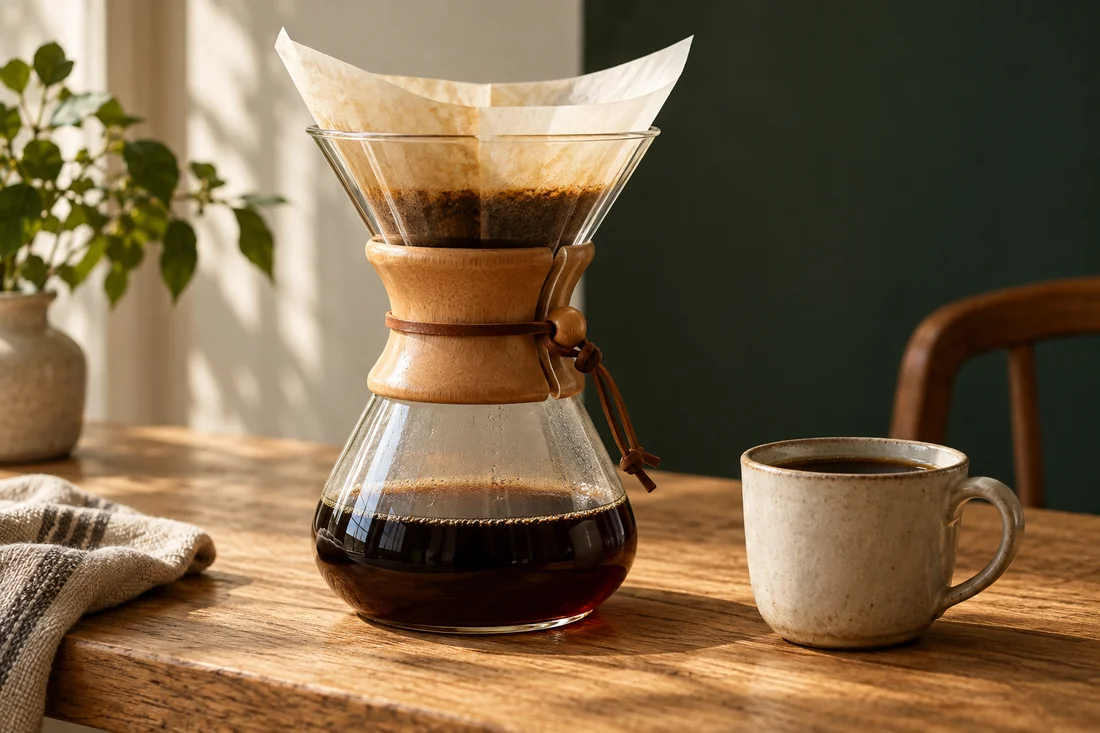
Filter coffee in a glass carafe beside a cup

Knowledge you can explore

One question before five controls

Three views make the relationship visible. Choose a question, compare the diagram and check your understanding.

What do you want to discover?Ask a specific question, such as whether a small grind adjustment makes these beans taste rounder. Record the beans, quantities and process. Also state when timing begins. Pump start and the first drip are different reference points, making apparently identical times hard to compare without that information.01 / 030102
  1. A specific questionA specific question
  2. One chosen variableOne chosen variable
  3. Record coffee, quantities, routineRecord coffee, quantities, routine

Scroll the diagram sideways to read every label.

One question shapes the experiment

Schematic illustration · not a measurement or real-time demonstration

01 / 03

What do you want to discover?

Ask a specific question, such as whether a small grind adjustment makes these beans taste rounder. Record the beans, quantities and process. Also state when timing begins. Pump start and the first drip are different reference points, making apparently identical times hard to compare without that information.

02 / 03

Change one chosen variable

Prepare your baseline and a slightly changed version. Use matching cups and similar drinking temperatures. Note intensity, aroma and mouthfeel before choosing a favourite. Greater strength is not automatically better; your judgement also depends on whether the coffee is intended for drinking black or with milk.

03 / 03

Give the winner another turn

Repeat the promising version before adopting it as your standard. Neutral cup labels can reduce expectations, but they are optional. If you find no consistent difference, choose the simpler version. That is useful information too. Keep your current favourite and a short change history handy for tomorrow morning.

A quick thought check

Both versions repeatedly taste equally good. What makes sense?

01

First frame your question

A useful comparison starts with a specific question. Instead of “How can I make my coffee better?”, try “Does this bean taste rounder with a slightly finer grind?” or “Do I prefer the cup after adding a little water?” This determines which variable to change. Keep the other conditions as consistent as possible so the result gives you a useful answer.

02

A recipe needs more than grams

Note the beans, opening date, grinder, setting, coffee, water and process. With espresso, include the beverage yield. For filter methods, the number of pours and total time help. Not every measurement needs decimal-place precision. Above all, it needs to be clear enough for you to repeat your attempt.

Also write down when you start timing. The start of water contact and the first drop in the cup are different starting points. Without this information, two recipes may look similar while measuring different things.

03

A comparison in five steps

  1. Choose a starting version and prepare it carefully.
  2. Change exactly one deliberately chosen variable by a small step.
  3. Use identical vessels and similar drinking temperatures for both samples.
  4. Record your observations first, then your overall preference.
  5. Repeat the winner before declaring it your new standard.
04

What you can assess

Separate intensity, aroma, mouthfeel and enjoyment. A cup can be stronger without you liking it more. A milder cup can have more clarity without being the right drink for your cappuccino. Judge according to its planned use, not an abstract league table.

World Coffee Research offers a professional reference system for sensory language. At home, a few understandable words are enough. What matters is that you mean roughly the same impression by rounded, dry or fruity.

05

Avoid small misleading impressions

If you know which cup uses the more elaborate recipe, you may automatically expect more. If interested, ask another person to label the cups neutrally. A blind comparison is not essential, but can help you allow for surprises.

Order can also play a part. Have a little water between two cups and take your time. Strongly flavoured food eaten immediately beforehand changes your starting point. You do not need a laboratory for an informal comparison, just a little attention.

06

When you can stop

If both versions taste good and you notice no consistent difference, choose the simpler one. You do not need to invent a difference to justify the experiment. The finding may be that this adjustment is currently unimportant in your daily routine.

07

Notes become routine

Keep only the best current version and a brief change history. Thirty unlabelled screenshots of other people’s recipes are little help in the morning. Your own short entry with quantities, process and taste is the real progress.

Frequently asked

Another question?

How many variables do I change at once?

Ideally just one, for an understandable comparison.

What if both versions are equally good?

Choose the simpler and more repeatable one. Finding no difference is a result too.

Sources & further reading

Related to this topic

Test one question with two cups

Choose a specific question, change one variable and repeat the preferred version. Only then make it your new standard.

Vergleich im Labor notieren ↗

Your coffee helper

Coffee Bro.

I help you brew, find coffee knowledge and show you what is on the menu. Your questions stay here in your browser.

Local content & guided help · no connected language model