
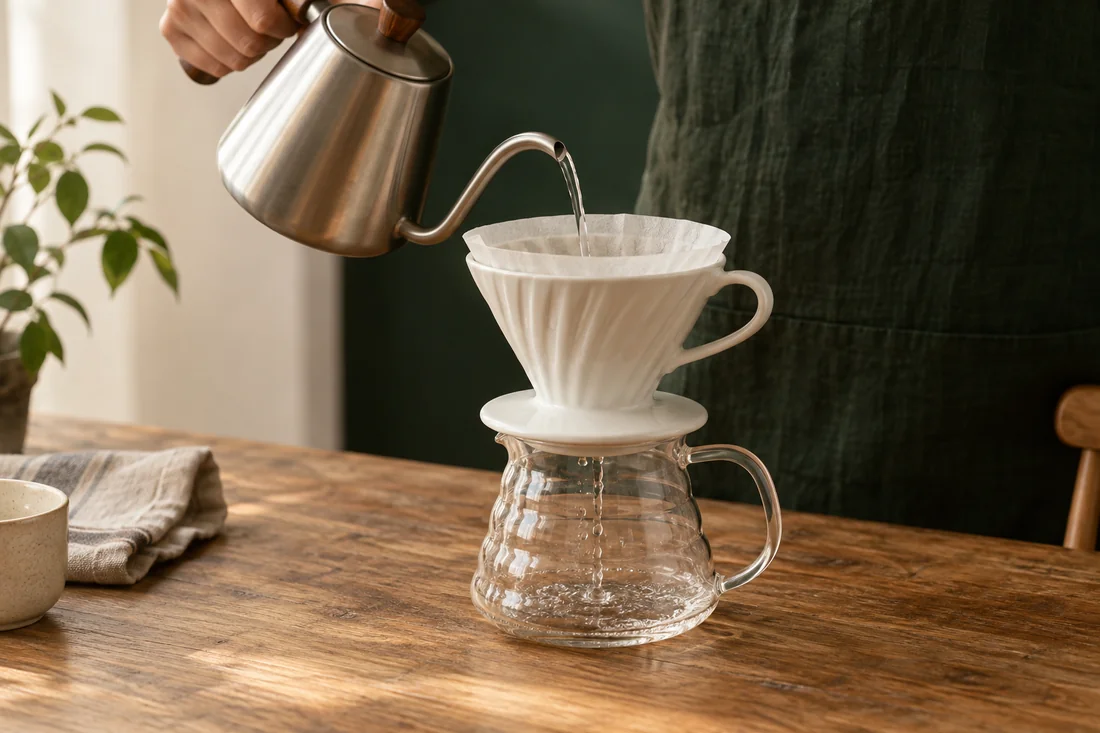
Start with the simple test
Taste your water on its own first. Unpleasant smells or a pronounced taste can also affect your coffee. Use suitable drinking water and follow local water-quality information. A brewing recipe is not a way to make unsafe water drinkable. Once suitability is clear, comparing taste and mineral levels becomes useful.
Distinguish hardness and buffering
Water hardness is largely determined by calcium and magnesium. Alkalinity describes water's ability to buffer acids. The two are often related but are not identical. A pH value alone also does not tell you how strongly a water will affect the perceived acidity of your coffee.
The SCA explains that alkalinity in particular, together with brew ratio, is relevant to perceived acidity. In practice, this means two waters that look identical can taste different with the same bean. It is not a sign that your grinder changed its mind overnight.
Consider flavour and technique together
Espresso machines have water requirements to limit deposits and other problems. Pure distilled water or water softened to an arbitrary degree is therefore not a general recommendation. Check your manufacturer's values and approvals. Water that tastes pleasant in a pour-over brewer is not automatically suitable for a machine boiler.
Filter cartridges work differently too. Some reduce particular substances, others change hardness or smell. The word filter alone does not tell you what effect a product has. Usage volume, replacement intervals and hygienic handling remain important.
A traceable comparison
- Choose two suitable drinking waters and label them neutrally as A and B.
- Brew the same coffee with the same quantities, temperature and grind size.
- Taste at a similar drinking temperature. Note acidity, clarity and aftertaste.
- If there is a clear difference, repeat before permanently changing settings or filters.
Which data helps you
Your water supplier's report can provide hardness and mineral values. The requirements of the specific machine are decisive. Household test strips can offer a rough guide, but cannot capture every water issue. Use them as instructed and do not interpret a colour level as a complete chemical analysis.
Less frantic adjusting
You do not need your own water laboratory for your first good cup. If your water tastes good and suits your equipment, start with it. A targeted comparison is only worthwhile when there is a specific problem. Testing different waters alongside a new bean and a new grind setting only makes the cause harder to see.
Care remains necessary
Filtered water does not remove cleaning obligations either. Descaling, filter replacement and hygienic tank care still follow the manual and actual use. Do not leave a water tank as an unattended long-term reservoir, and clean it in the prescribed way.