
Espresso practice · 3 MIN READ

Recording your espresso recipe

Dose, beverage weight, time and flavour: a few notes help you return to a good setting.

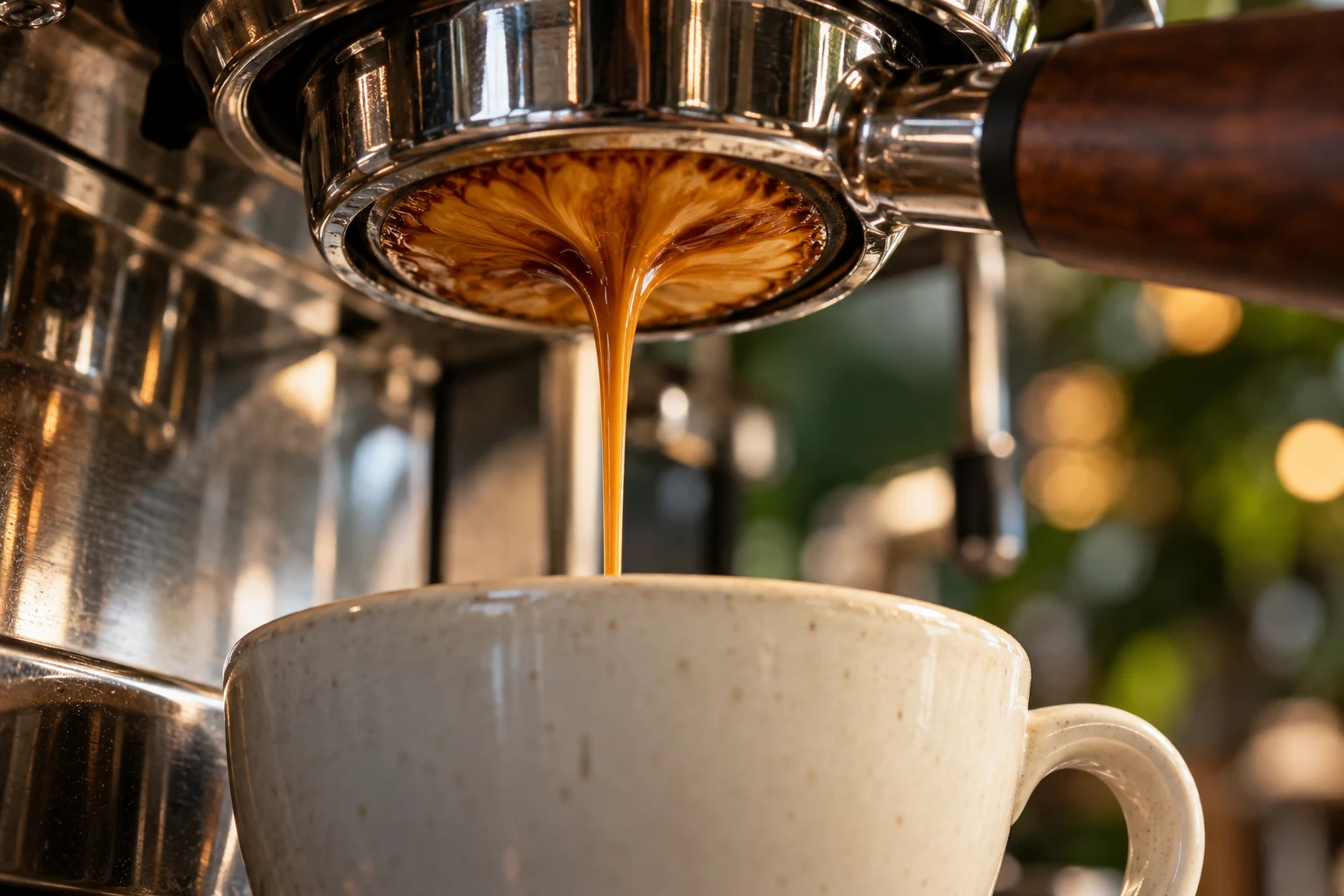
Espresso flowing from a portafilter into a cup

Knowledge you can explore

Your morning needs clear notes

Three views make the relationship visible. Choose a question, compare the diagram and check your understanding.

A few unambiguous detailsRecord beans, date, dose, beverage mass, grinder setting and extraction time. State whether timing begins at pump start or first drip and whether preinfusion is included. Your grinder number helps you return to a setting, but is no shared unit for other machines and their individual adjustments.01 / 0301020304
  1. Coffee and dateCoffee and date
  2. Dose and drink massDose and drink mass
  3. Grind settingGrind setting
  4. Time with starting pointTime with starting point

Scroll the diagram sideways to read every label.

State the timing start

Schematic illustration · not a measurement or real-time demonstration

01 / 03

A few unambiguous details

Record beans, date, dose, beverage mass, grinder setting and extraction time. State whether timing begins at pump start or first drip and whether preinfusion is included. Your grinder number helps you return to a setting, but is no shared unit for other machines and their individual adjustments.

02 / 03

Flavour needs a serving context

Add a short taste note and the serving context: black or with milk. The same espresso can seem very concentrated alone and just right in a milk drink. Ask a specific question, such as whether stopping earlier improves the finish. Change only the variable chosen for that question.

03 / 03

A favourite recipe can evolve

Repeat a promising setting before calling it your favourite. Write notes immediately after tasting while the impression is fresh. A bag photograph adds bean information; a cup photograph cannot replace quantities. Keep one understandable main recipe with brief changes rather than collecting new numbers every morning.

A quick thought check

Which time note is especially useful for later comparisons?

01

What you should actually write down

A useful record needs only the beans, date, coffee dose, beverage weight, extraction time and a brief tasting note. Coffee dose here means the weight of the dry grounds; beverage weight means the weight of the finished espresso in the cup. Add your grinder setting. This number helps you return to it; it is not a shared unit of measurement across different grinders.

A clear definition of timing matters. Do you start when the pump starts or at the first drop? Either can be documented, but do not mix them without noticing. Also record whether a pre-infusion phase is included. Otherwise, an apparent difference of several seconds may simply come from a different measuring method.

02

A concrete entry

One possible starting point for a suitable double basket is: 18 grams of coffee, 36 grams of beverage, 29 seconds from pump start. Tasting notes: pleasantly strong, slightly dry finish. These figures are an example calculation, not a prescription for every bean and basket. The next entry might record 34 grams of beverage at the same dose. You can then judge whether the smaller yield moves things in the desired direction.

Also briefly note how you drank the coffee. Black and in 180 millilitres of milk are two different uses. An espresso that seems very concentrated on its own may be just right in a milk drink. You are documenting a purpose and your taste, not a universal winning formula.

03

One change, one question

Before trying it, frame a question: will the finish be more pleasant if I stop a little earlier? Or: will the sharp acidity disappear with a slightly larger drink yield? Then change only your chosen variable. Keep everything else as constant as practical. This prevents you from drawing an apparently clear conclusion about the cause when dose, temperature and grind have all changed at once.

Repeat a promising setting. Only when it impresses you again does it earn favourite-recipe status. You do not need to keep a failed shot, but do keep its notes. Even a dead end is useful: you will not have to take the same unsuccessful path tomorrow.

04

A log you actually use

Keep a brief note on your phone or a card beside the grinder. Write things down straight after tasting, while the memory is fresh. A photo of the cup adds information but cannot replace measurements. A photo of the packaging, however, saves you copying long product names and records the roast date and batch, where provided.

For everyday use, one main recipe with two variations is enough: black and with milk. If the beans behave differently over time, adjust gently and record the change. Do not blindly copy the old recipe to your next bag. The aim is guidance, not defending a number. Your log should make coffee easier, not give you a second office job.

Frequently asked

Another question?

Must I log every espresso?

No. Notes are especially helpful when dialling in or troubleshooting; a stable everyday recipe needs no constant bookkeeping.

Can I share grind setting numbers?

As a guide on the same grinder, yes. Model, calibration and bean can change what a number means.

Sources & further reading

Related to this topic

One note, one comparison

Record the starting recipe beside your adjustment. Comparing them shows which setting you prefer.

Rezepte gezielt vergleichen ↗

Your coffee helper

Coffee Bro.

I help you brew, find coffee knowledge and show you what is on the menu. Your questions stay here in your browser.

Local content & guided help · no connected language model