
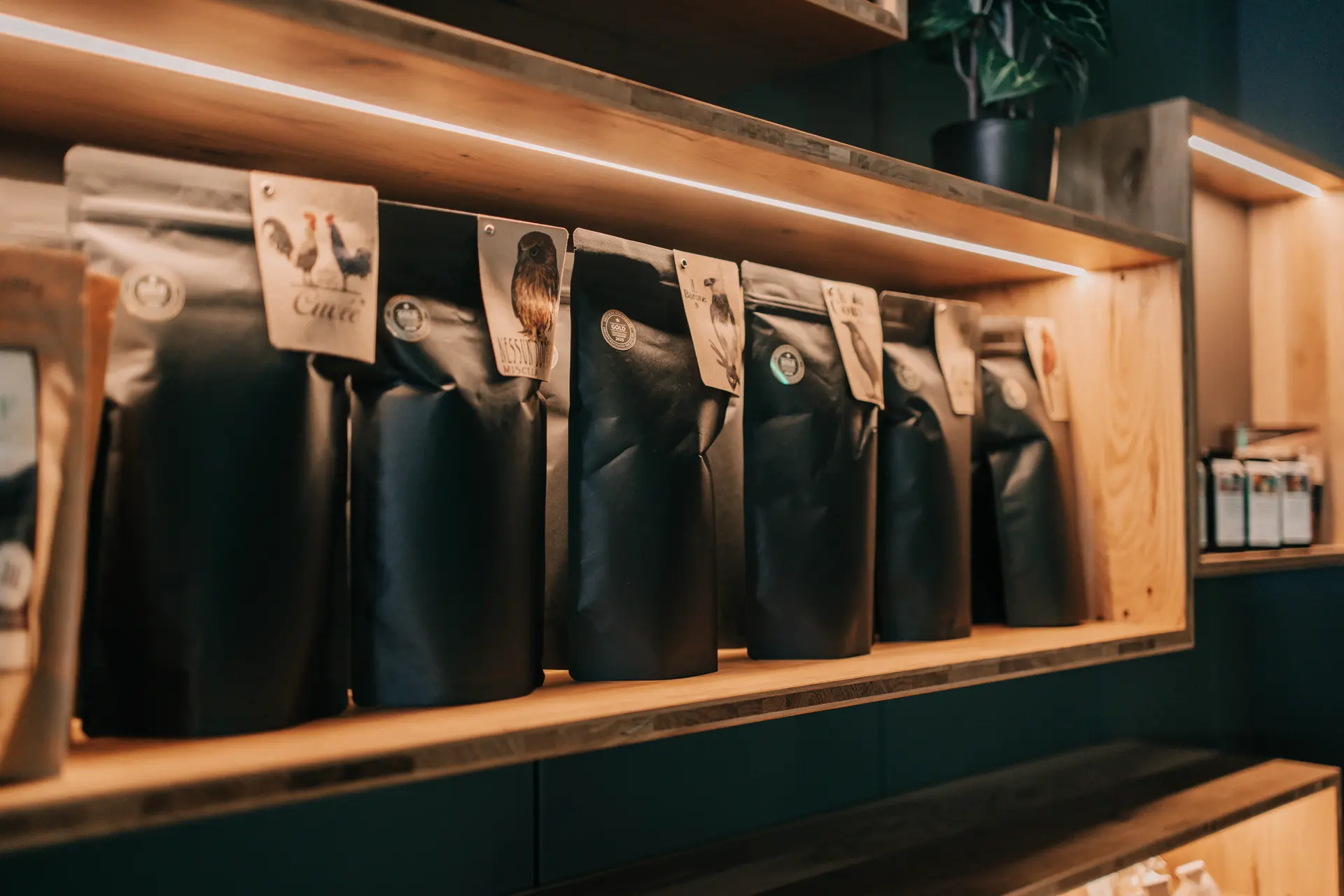
Three questions before the logo
What is assessed? Who checks it? Which product or component does the claim cover? These questions make a certification easier to understand than a quick glance at its colour. An environmental standard, a trading rule and a taste rating serve different purposes.
Also pay attention to the exact wording and accompanying information. A self-designed leaf on a pack is not automatically the EU organic logo. Words such as conscious, natural or sustainable can be very broad without further details.
Organic, Fairtrade and Rainforest Alliance
The EU organic logo refers to certified organic production and corresponding rules for the rest of the chain. The European Commission explains aspects including the control body code and origin labelling. Organic is therefore a specific production claim, but not an automatic tasting note or a complete wage model.
Fairtrade explains trading tools for coffee such as a minimum price and a premium. Rainforest Alliance has its own requirements for farming and business practices. These systems should not be read as interchangeable symbols. For details, the responsible organisation's current standard is what counts.
What a certification label does not promise
No logo reliably tells you whether a bean is fruity enough for you or roasted too dark. Nor does a standard replace every detail about the actual supplier relationship. A certified product may offer additional useful transparency; certification alone does not automatically tell the whole story.
Conversely, a lack of certification is not complete proof of poor practice. Initially, it means you cannot assume the relevant certified claim. If a supplier cites other evidence, check how specific and traceable it is.
Take time to read the bag
Look on the pack for the official name of the standard and further information about its scope. The EU organic logo is accompanied by the control-body code and agricultural origin information. Other systems have their own labelling rules. For products with several ingredients, also check which ingredients the label covers. Do not apply one certification’s rules to another without checking.
Photograph the information if you want to check it later. Visit the organisation’s website rather than any advertising post. Standards change; older comparison graphics may miss important details. A sound assessment therefore states its date and avoids blanket rankings of winners.
Compile your criteria
Think about what you want your purchase to support: organic production, defined trading conditions, traceable origin or a combination. A product can meet several criteria. You need not play these wishes off against each other, but should know which information addresses which wish.
For a specific product, ask which certification applies to that exact coffee. A statement about a range does not replace this check.