
Basics · 3 MIN READ

Temperature & flavour

Brewing temperature and drinking temperature are two different things. Both affect what you perceive.

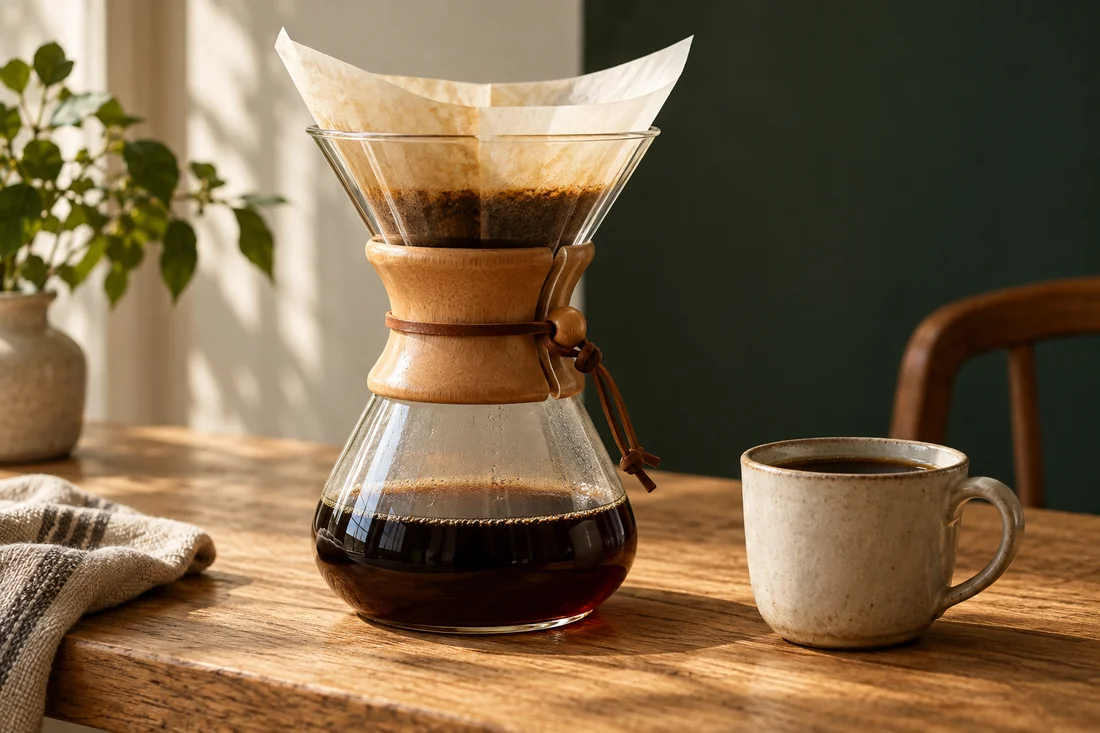
Filter coffee in a glass carafe beside a cup

Knowledge you can explore

One cup, several moments

Three views make the relationship visible. Choose a question, compare the diagram and check your understanding.

The kettle setting is a referenceHeat is lost on the way from the kettle to the coffee bed. Materials, preheating and portion size change the temperature pattern. Start with the same setup and similar pauses each time. A temperature setting is useful, but it cannot describe every part of the filter throughout brewing.01 / 03
  1. KettleKettle
  2. Journey to the coffee bedJourney to the coffee bed
  3. Heat is lost on the wayHeat is lost on the way

Scroll the diagram sideways to read every label.

Heat escapes along the way

Schematic illustration · not a measurement or real-time demonstration

01 / 03

The kettle setting is a reference

Heat is lost on the way from the kettle to the coffee bed. Materials, preheating and portion size change the temperature pattern. Start with the same setup and similar pauses each time. A temperature setting is useful, but it cannot describe every part of the filter throughout brewing.

02 / 03

Cooling is no second extraction

Taste the same coffee first comfortably hot and later warm. Fruit or bitterness may seem different. You are observing perception at different drinking temperatures. Grounds that have already been removed are not being extracted again. This experiment needs no second batch of coffee to be brewed.

03 / 03

Compare brewing temperatures fairly

To test brewing temperature, change only that setting by a small amount. Keep quantities, grind and preparation the same. Let both results reach similar drinking temperatures before comparing them. Otherwise, a difference in how you taste can easily be confused with a difference in how you brewed.

A quick thought check

Why taste both brewing attempts at similar drinking temperatures?

01

Two temperatures, two tasks

Brewing temperature and drinking temperature have different roles. The first describes the water during preparation; the second describes the coffee when you taste it. Brewing hot does not mean drinking scalding coffee. Let the cup cool to a comfortable temperature: very hot sips make precise assessment harder and can cause scalds.

02

The number on the kettle is not everything

Heat is lost between kettle, stream, filter and coffee bed. A cold ceramic dripper behaves differently from a preheated plastic one. Small quantities also lose heat relatively quickly. The set number is therefore a useful reference point, not a guaranteed temperature everywhere in the coffee bed.

First establish a repeatable setup. Preheat suitable parts, keep pauses short and use the same water amount. This lets you judge changes more meaningfully than a supposedly precise value alongside constantly changing preparation.

03

What temperature can do

Warmer water changes extraction conditions. The rule “hotter means bitter, cooler means sour” is still too simple. The filter-coffee study discussed by the SCA compared 87, 90 and 93 degrees at comparable strength and extraction. In that experiment, temperature alone had little effect on the sensory profile. The result applies to the conditions studied, not automatically to espresso, cold brew or every roast. Always consider the whole recipe.

04

How to test a change

  1. Choose a starting value suited to the method and bean. Keep dose, grind size and water constant.
  2. Brew the first cup and record the entire process.
  3. On the second attempt, change only the set water temperature by one small step.
  4. Let both cups reach a comparable drinking temperature, then taste.
05

If you do not have a temperature-controlled kettle

Work with a consistent routine rather than claiming an exact temperature. Waiting a set time after boiling produces different values depending on kettle, fill level and room temperature. It is a practical routine, not a reliable universal conversion of seconds into degrees.

06

Get to know the cup as it cools

Taste the same coffee several times: first pleasantly hot, later warm. Note whether fruit, sweetness or bitterness appear differently. You are comparing the same cup with changed perception, not two extractions. This little experiment costs no extra beans.

07

Equipment specifications take priority

Do not fill a filter machine's tank with hot water simply because a pour-over recipe calls for high temperatures. Use the intended settings on bean-to-cup and portafilter machines. Do not modify safety devices to achieve a desired number. A clean, consistent routine is far more valuable day to day than risky temperature optimisation.

Frequently asked

Another question?

Is 93 degrees always ideal?

No. Method, coffee, equipment and personal taste all play a part.

Why does the cup taste different as it cools?

Perception changes with drinking temperature; the original extraction has already happened.

Sources & further reading

Related to this topic

Read the cup as it cools

Taste the same coffee comfortably hot and later warm. Record which aromas and aftertaste become more apparent.

Aromen genauer beschreiben ↗

Your coffee helper

Coffee Bro.

I help you brew, find coffee knowledge and show you what is on the menu. Your questions stay here in your browser.

Local content & guided help · no connected language model