
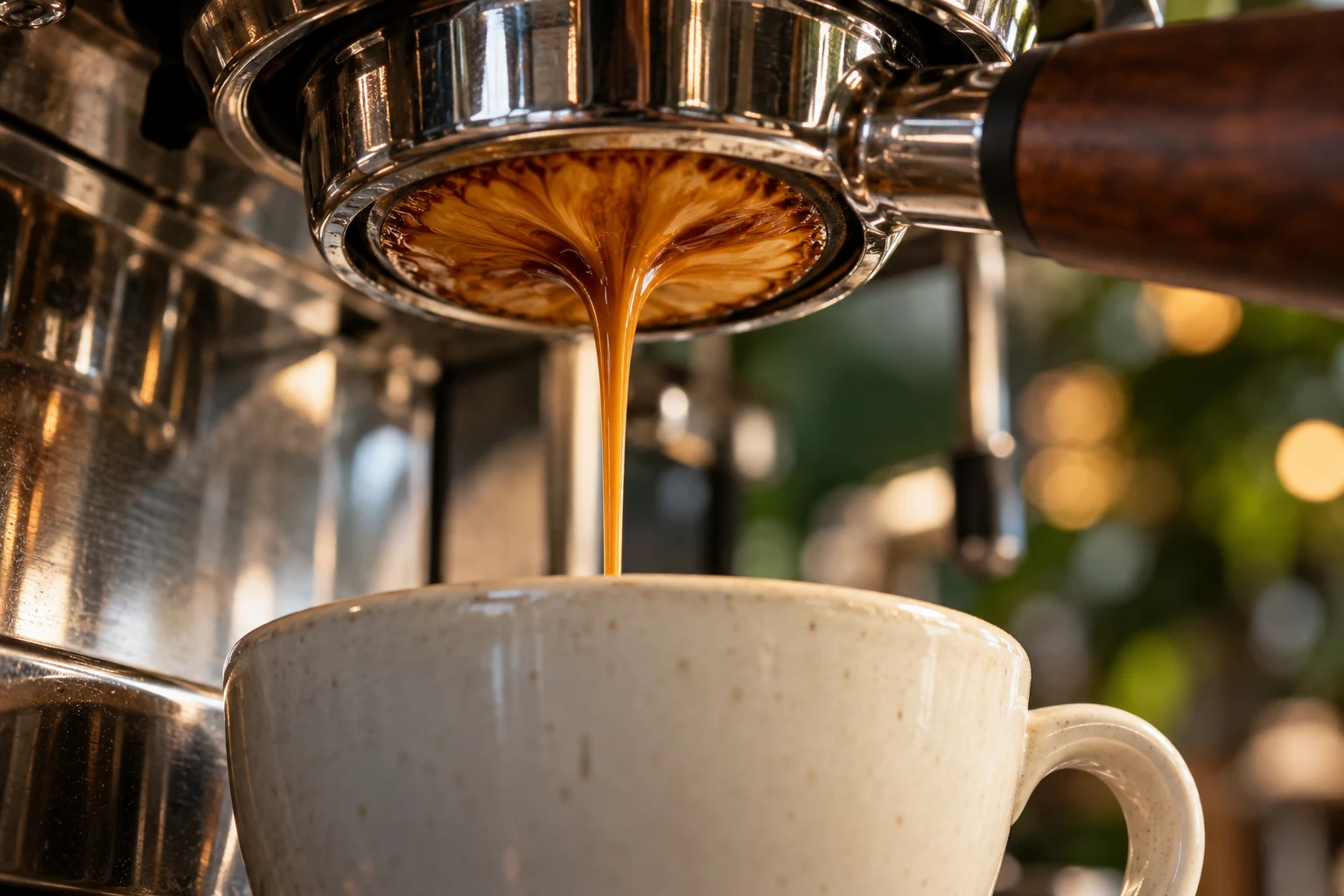
What the golden surface shows
Crema is the fine foam on espresso. It forms during brewing under pressure and is not added afterwards. The beans, roast, freshness and preparation affect its appearance. A thick layer is therefore no reliable proof of quality. An espresso with little crema can taste excellent; an impressive surface can also cover a bitter coffee.
Include crema as an observation in your recipe notes, but do not give it the final say. What matters is whether the cup smells pleasant, tastes balanced and feels right to you. A photo opportunity is not a taste test. Visual expectations can confuse more than help, especially when comparing different beans.
How to taste purposefully
Give your espresso a quick stir before the first sip. This lets you assess the drink as a mixture, rather than tasting only the surface first. Let it cool a little so that heat is not all you notice. Record acidity, bitterness and mouthfeel separately: lively, slightly bitter, velvety, for example. A single word such as strong says too little.
If you are curious, taste a small amount of crema separately, then the stirred espresso. This is a perception experiment, not an instruction to skim off the surface. Above all, you will notice why judging a single layer does not automatically explain the whole cup. Use clean spoons and drink at your normal pace.
Little crema: look at the recipe first
Check whether the beans and preparation are actually comparable. After changing beans, it is best not to expect the same colour and height. Then check the coffee dose and beverage yield with scales. Volume markings are impractical for espresso because foam makes up part of the visible volume. A 36-gram drink remains a clearer measurement than a glass filled to a line.
If the espresso tastes good, there is no need to start fixing it. If it tastes watery or unbalanced, try a documented experiment with a different grind or yield. Change only one thing. Otherwise, you may get more crema but still not know why you like the coffee more or less.
Tiger stripes without exam stress
Spots and patterns can look attractive. Your enjoyment does not depend on a particular pattern. The popular sugar test mainly shows how a surface supports weight sprinkled onto it. It replaces neither sensory assessment nor a sound recipe. Save the sugar for something other than testing, and decide for yourself whether you want it in your drink.
A useful note might read: same bean, 18 grams in, 36 grams out, pleasantly sweet after stirring, slightly less crema than yesterday. That helps more than: visually imperfect today. Assess changes across several comparable extractions. One shot can stand out because of small variations in preparation or measurement without your beans suddenly having gone bad.