
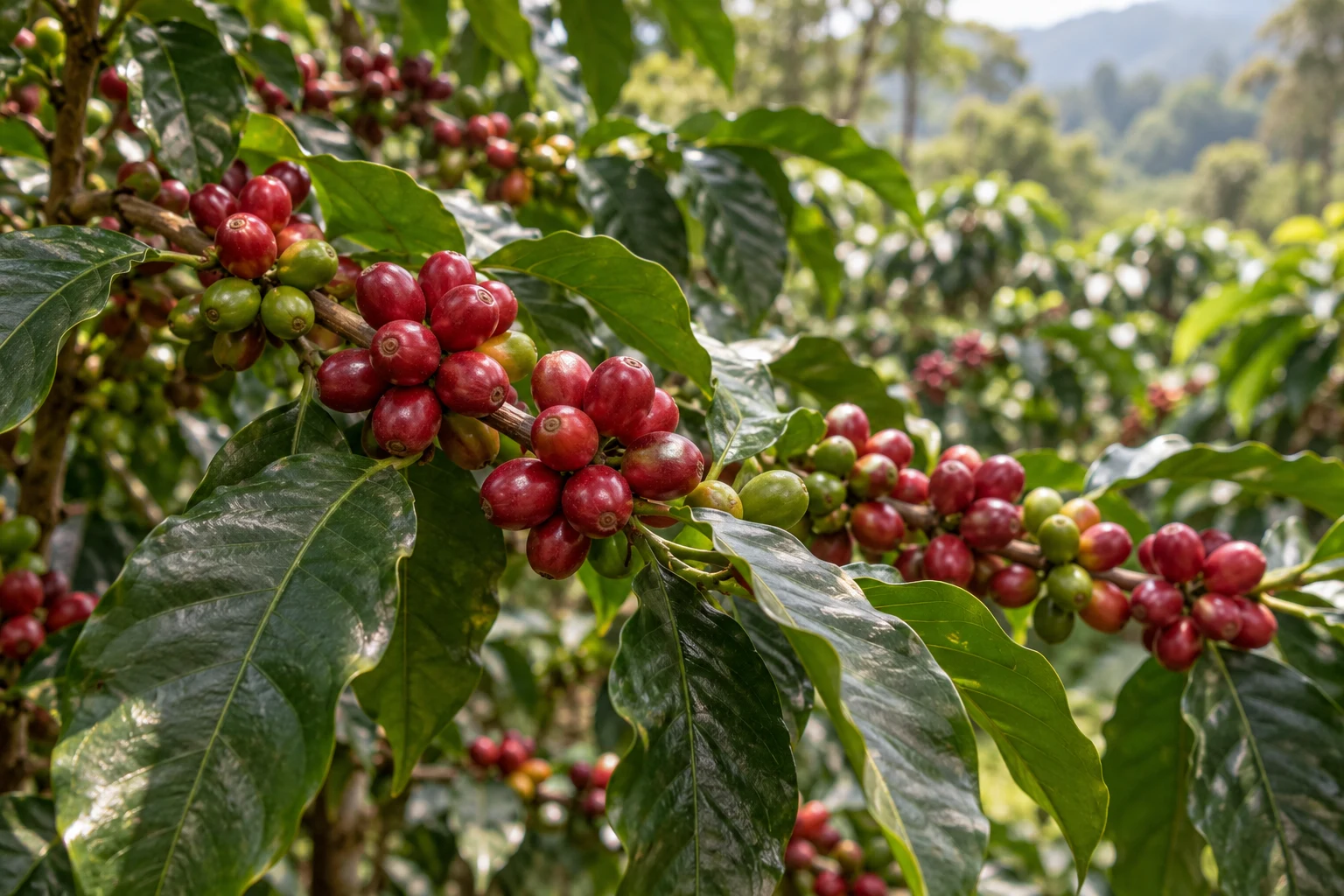
Ripeness does not happen everywhere at once
Fruit on a coffee tree can be at different stages of development. Harvesting therefore needs to suit the location, plant and operational process. Selective picking, strip picking and mechanical methods are different approaches. The word hand-picked alone does not establish how a coffee will taste: what is subsequently sorted out and how it is processed also matter.
Look for specific details in harvest descriptions: were there several picking rounds? How were ripe and unripe fruits separated? What sorting followed? This information explains the process more precisely than “hand-picked” alone. Manual work can be careful, but without selection for ripeness and subsequent processing it does not give a complete quality assessment of the coffee.
Sorting happens several times
Fruit can be checked and separated after harvesting. Later, the dried or hulled green coffee is also sorted by various characteristics. Size, density, visible irregularities and sensory assessments may all play a role. No single step can detect every possible problem.
A large bean does not necessarily taste better than a small one. Size grades help, among other things, to classify lots technically. When discussing a purchase, the quality checks actually performed are therefore more interesting than which bean looks most impressive in a photo.
Why care continues after harvest
The work is not finished after picking. Fruit must enter the intended processing method promptly and under controlled conditions. In Natural processing, the fruit dries around the seed, and the lot needs particular attention. Poor drying cannot simply be offset by pointing to careful picking.
Quality is a chain. That sounds less spectacular than one magical growing method, but better explains why two coffees from the same area can turn out differently. A sound process involves many controlled decisions rather than one outstanding moment.
What you gain as a coffee drinker
If a coffee names a farm, cooperative or processing station, you can ask more focused questions. Which harvest is in the pack? How was the lot processed? Is there information on sorting or sensory assessment? You do not need every answer to enjoy a good cup, but the questions help separate real information from mere atmosphere.
Avoid imagining that one person must have personally selected every bean in your cup. Many high-quality lots result from collaborative, technically supported processes. What matters is whether the system delivers the intended result and is described transparently.
A fair comparison
Compare coffees on the basis of what is known wherever possible. If one product is documented in detail and another only names a country of origin, you know more about the first — that does not automatically tell you how the second tastes. Keep transparency and sensory preference separate in your notes.
At home, a simple exercise is enough: note a pack's origin information, then add your own flavour words after tasting. This shows which details actually help you find a favourite coffee again.