
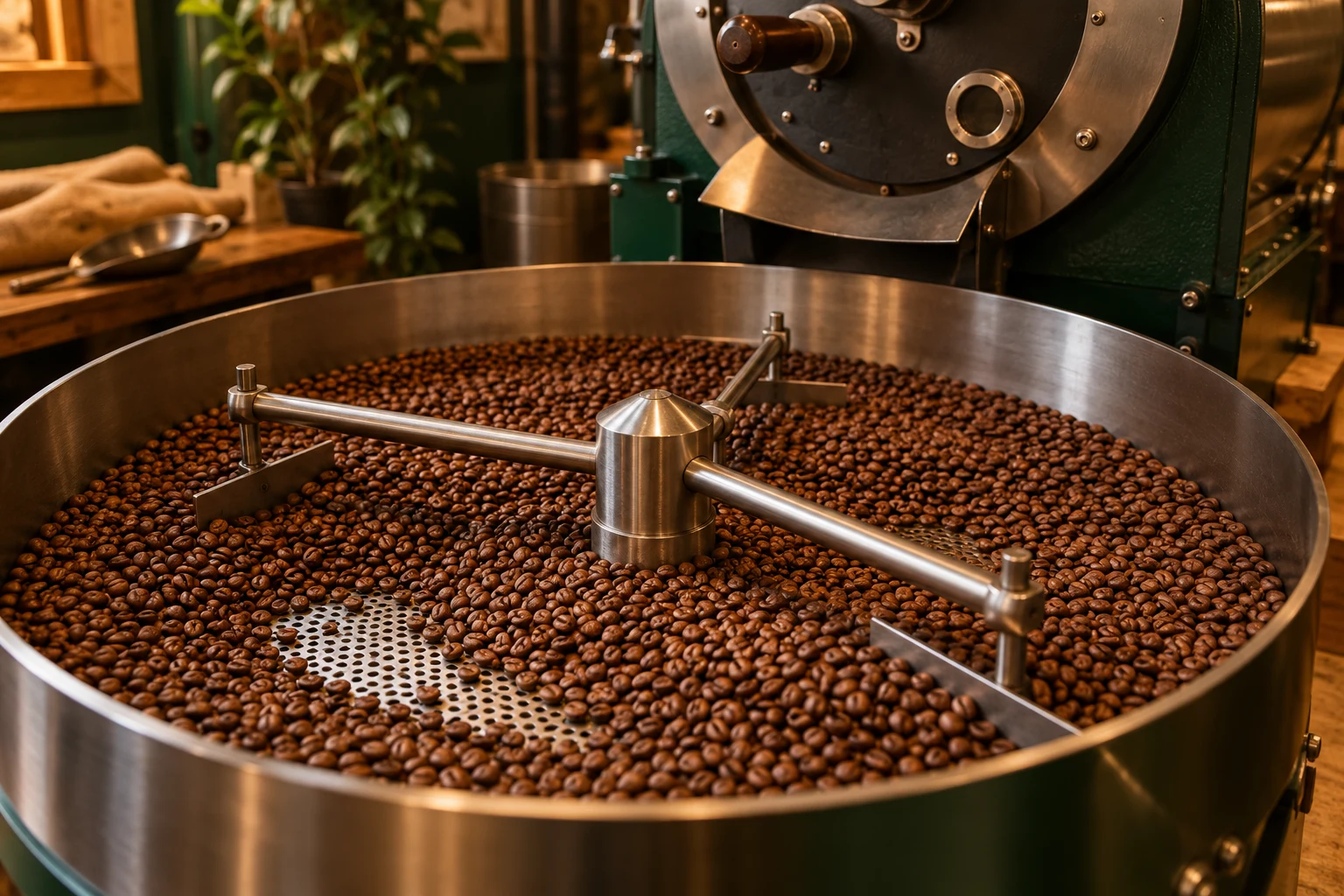
Creating more than colour
Roasting changes green coffee through controlled heat input. Colour, aroma, structure and later brewing properties develop together. Roasters work with a progression over time, rather than just a final shade of brown. Two coffees can look similar yet taste different.
A roast profile describes this progression through measurements and interventions. The figures also depend on the machine, probe position and batch size. A temperature curve from the internet therefore cannot be transferred unchanged to every roaster like a cake recipe.
Understanding light, medium and dark
These words help with selection, but are not fully standardised across suppliers. Also ask about the intended flavour profile and preparation method. A roast labelled espresso is not automatically very dark. Some roasters develop light espressos, others stronger classic blends.
For your cup, this means a light roast can have prominent fruitiness without being unpleasantly sour. A darker roast can offer pronounced roast aromas without tasting burnt. Quality does not come from a fixed position on a light-to-dark scale.
Consider roast and recipe together
If you switch from a darker bean to a much lighter one, your old recipe may no longer fit. Check grind size, ratio and temperature before dismissing the entire category. Similarly, with darker beans you may not need the same long shot as with your previous espresso.
Change one variable first. For example, keep the dose constant and adjust the beverage yield. Taste before changing the temperature. This prevents a carousel of settings where nobody knows why the cup tastes different by the end.
A small roast comparison project
If you can get two roasts of the same green coffee, that makes a particularly interesting comparison. If the beans differ, note this explicitly. Prepare both carefully and taste them at similar drinking temperatures. Do not immediately seek a winner; describe differences in acidity, bitterness, mouthfeel and aftertaste.
Try a small amount with your usual milk too. A coffee that is not your favourite black may work well this way. Your everyday habits are a legitimate measure. There is no prize for always drinking coffee black against your preference.
Good questions for the roaster
Ask about the intended use, a starting recipe and the recommended resting time after roasting. This information offers more than a vague claim of particularly gentle roasting. If technical details interest you, ask what flavour a change in the roast profile was intended to achieve.
For the specific beans, ask who roasted them and what origin information is available. A transparent recommendation distinguishes selection, roasting and preparation and explains who handles each part. For your cup, a suitable recipe and careful work are then essential. A good description should provide verifiable information rather than replace a stage of work with an appealing story.