
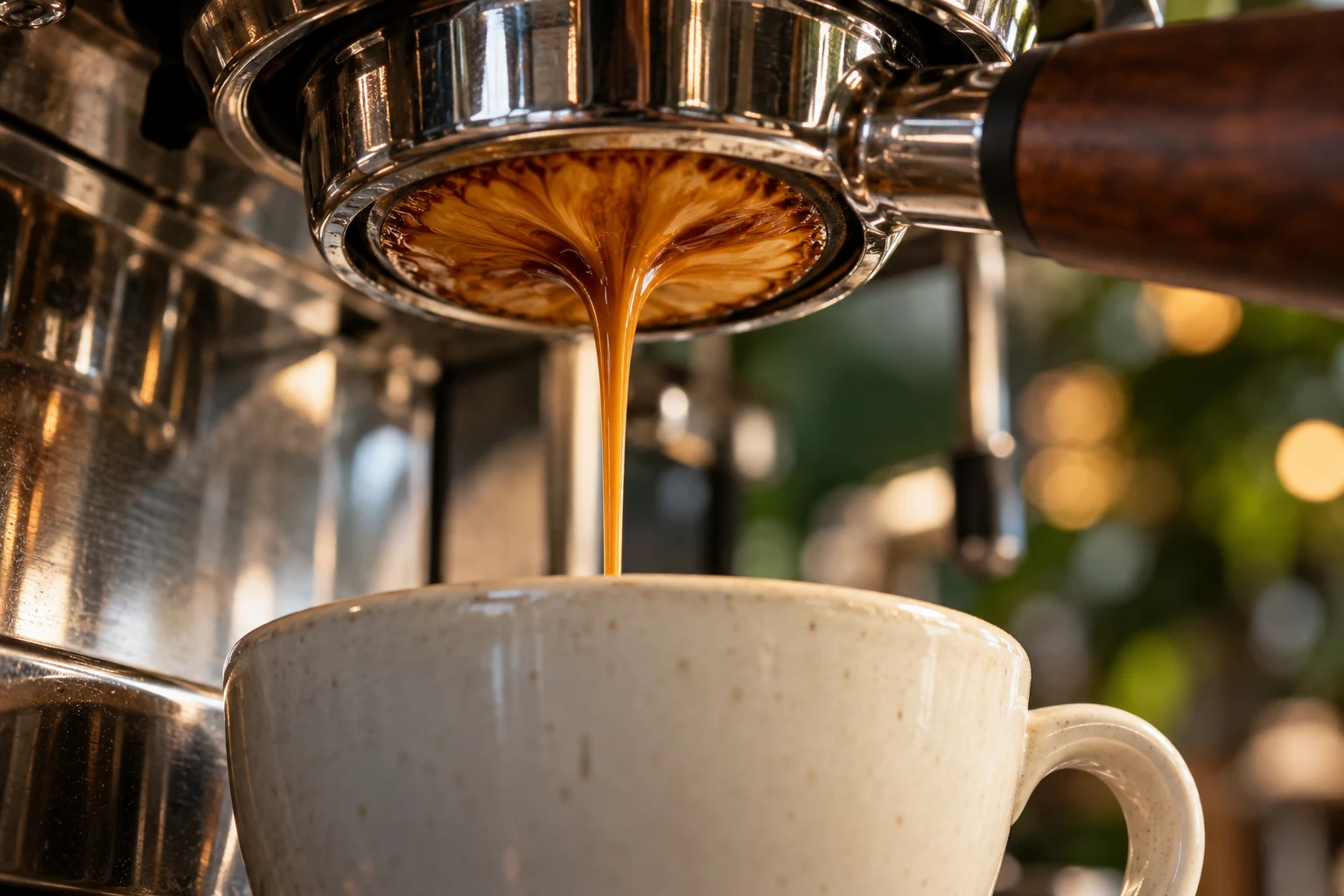
A sparkling starting point
For a large glass, start with 120 millilitres of well-chilled tonic water, one espresso and plenty of ice. This ratio is our own starting recipe to try. Tonics differ considerably in sweetness, bitterness and flavouring. Taste your tonic on its own first so you know what it contributes to the mix.
A fruit-led espresso can be exciting; a chocolatey one can create a different balance. No origin automatically guarantees the best pairing. First prepare the espresso so that you enjoy it without tonic too. A deliberately over-extracted shot does not make the drink more grown-up, often just unpleasant.
How to build the drink
Fill a large, suitable glass with ice and slowly pour in the cold tonic. Leave enough room for espresso and possible foam. Then carefully add the coffee over a spoon or down the side of the glass. Pouring quickly can cause vigorous foaming; this is exactly why the space below the rim is useful.
If you want an even flavour, stir gently once. Vigorous stirring drives out carbonation. Serve straight away and try a small sip first. The result can be lively and full of contrast, but should not feel like two drinks arguing.
Identify bitterness correctly
In this combination, bitterness does not come only from the coffee. The quinine in tonic brings a bitter note of its own. If the mixture is too bitter, take separate sips of espresso and tonic. This helps you identify which side you want to change first. A milder tonic may help more than spending ages adjusting the grinder.
If the drink tastes too sweet, first try a little less tonic with the same amount of espresso. This will also make the coffee more prominent. Alternatively, compare a different tonic formulation using the same quantities. Sweeteners bring their own flavour. Decide using the ingredient list and your impression in the glass; this recipe does not need a universally best brand.
Garnish in moderation
A little citrus zest can complement the aroma. Use suitable, thoroughly washed fruit and check the labelling for the peel. Do not automatically squeeze in a large lemon wedge: extra acidity changes the mixture considerably. Start without a garnish and decide after tasting.
Herbs and strongly flavoured tonics can also quickly overpower the coffee. If your aim is to discover the bean, keep the rest restrained. If you want to make a playful drink, feel free to add more flavour. Simply name what you want to compare.
Alcohol-free does not mean caffeine-free
This version of Espresso Tonic contains no alcohol, but does contain caffeine from the coffee. Decaffeinated espresso can reduce this. Tonic contains quinine. The BfR recommends avoiding drinks containing quinine during pregnancy. For other medically relevant questions, follow individual advice and product information. The alcohol-free description is not a blanket assurance of suitability for everyone's health.
For guests, ask beforehand whether they like coffee, bitterness and carbonation. A small tasting glass is often nicer than a huge serving. After all, a successful recipe needs both contrast and someone who enjoys that particular contrast.