
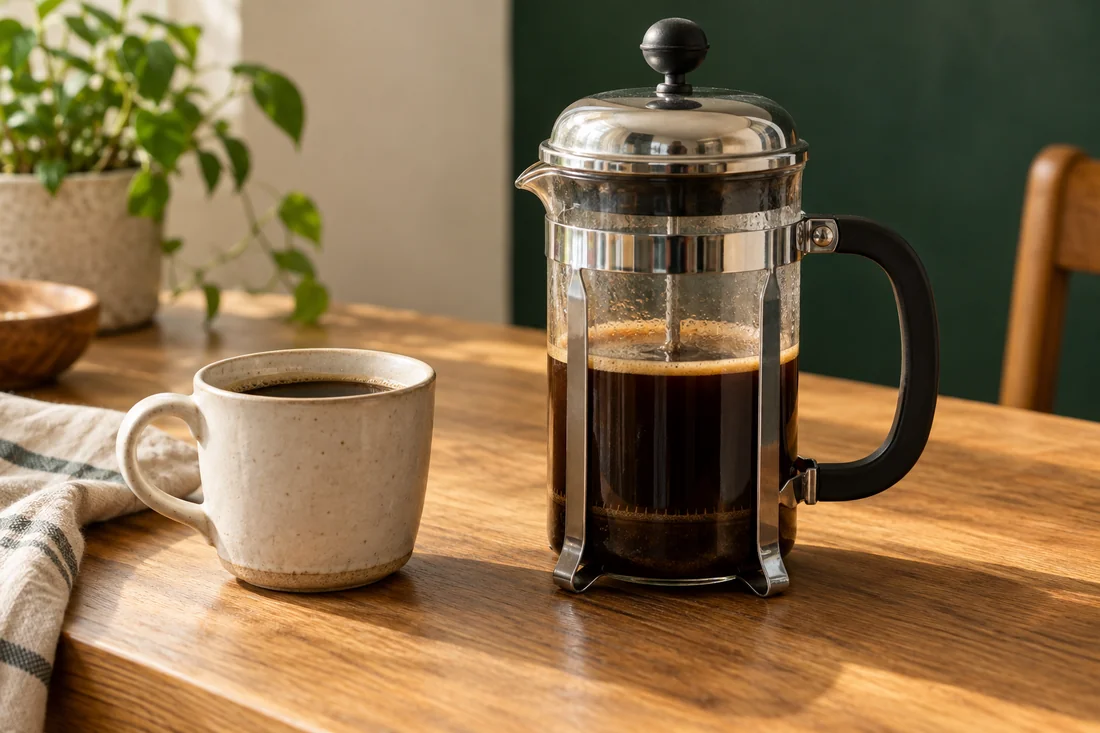
No cup as a promise of healing
You do not need to declare coffee a superfood or demonise it altogether. A drink can fit into everyday life without preventing or treating a disease. Headlines about longer lives or individual ingredients often leave unclear whether a study merely observed associations or actually investigated causes.
Observational studies examine associations, for example between coffee consumption and a later health outcome. Lifestyle, participant selection and other factors may also play a role. Even statistical adjustments do not rule out every alternative explanation. An observed association therefore does not create a personal recommendation to drink more coffee. First check which question was studied and which conclusion the data actually supports.
Put caffeine quantities in perspective
For healthy adults, EFSA cites up to 200 milligrams as a single dose and up to 400 milligrams in total throughout the day as amounts that raise no general safety concerns. Lower guidance of up to 200 milligrams in total daily applies during pregnancy and breastfeeding. These are not targets or a guarantee of no individual adverse effects.
This assessment cannot be applied universally to people with medical conditions, medication interactions or particular sensitivity. Children and adolescents are not simply small adults following the same cup rule either. For personal questions, medical advice or a pharmacy is more appropriate than a general drinks article.
Look at the whole drink composition
A black coffee and a large drink with syrup, cream and ice cream are nutritionally different products. If you want to assess your diet, consider the actual ingredients and quantities. Sharing the name coffee does not make them identical portions.
Your choice of milk or plant-based drink should also suit your needs. Allergens, tolerability and nutritional values depend on the specific product. A plant-based version is not automatically better for everyone, and tasting less sweet does not necessarily mean low sugar.
When your body reacts
Restlessness, palpitations or sleep problems should not be ignored with the claim that the amount is below a general limit. If you suspect a connection, reduce your intake and seek medical advice for persistent or significant symptoms. Acute, severe symptoms need immediate assessment.
If you regularly consume a lot of caffeine and want to cut down, a gradual switch may be more practical. Include every source in your plan. Another energy drink counts just as coffee does. Pure caffeine powder is not a sensible kitchen alternative because safe dosing is difficult.
Questions that help with headlines
Who was studied? How was coffee consumption recorded? Was it about caffeine or the whole drink? Was the research observational or experimental? And how large was the effect actually measured? You do not need a statistics degree to take these differences seriously.
A measured approach is enough for everyday life: enjoy coffee if you tolerate and like it, observe your sleep and wellbeing, and do not treat it as medicine. If you do not want it, you do not have to start drinking it for health reasons.