
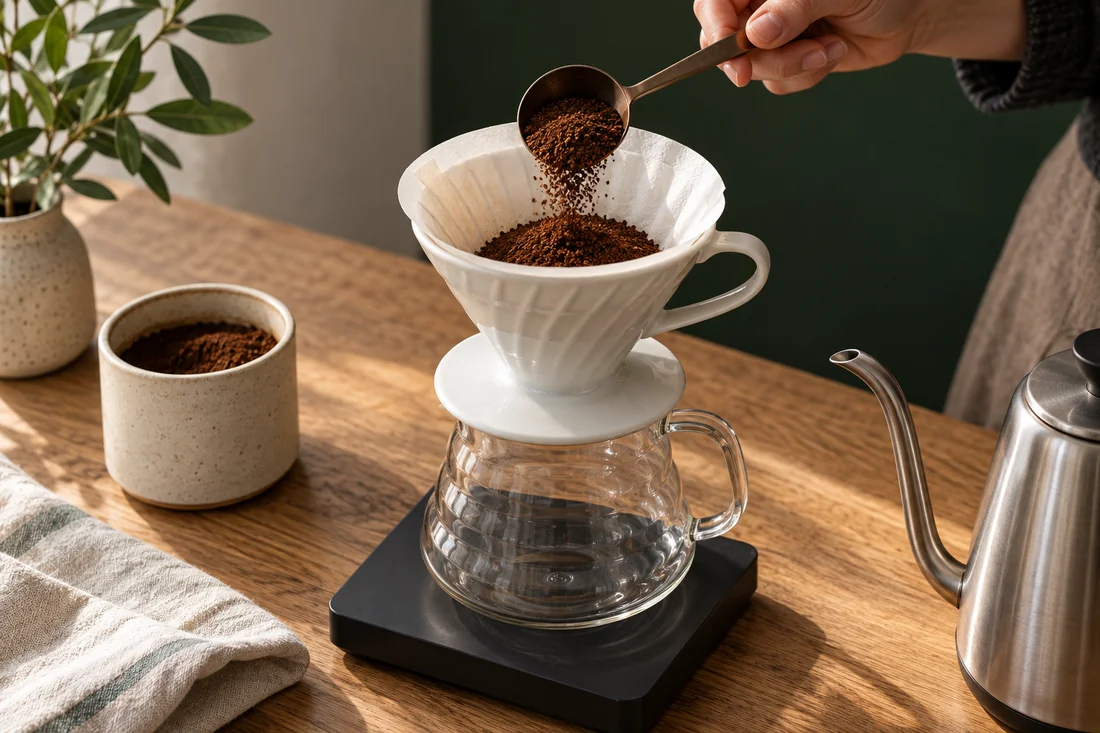
Start with your preparation method
Do you mainly want to grind filter coffee or dial in espresso? Fine, well-controlled adjustments are especially important for espresso. If you switch between coarse French press grounds and fine espresso, you also need a reliable way back to your previous setting. A long list of grind settings alone does not tell you how usefully they are distributed within your range.
Before choosing, write down three things: method, daily quantity and desired effort. Two filter coffees in the morning have different requirements from many milk drinks for guests. The best grinder on someone else’s rankings may therefore not be the best one for your table.
Manual or electric grinder
A hand grinder needs no power socket and can be practical for small quantities. Turning the handle is part of the routine, though. Check whether the handle, body and resistance feel comfortable. If you have hand or shoulder discomfort, a brief realistic trial is more useful than a theoretical performance figure.
An electric grinder makes larger quantities and frequent extractions easier. Consider noise, space requirements and access to the hopper beneath a wall cupboard. A machine that requires contortions to fill becomes annoying in daily use faster than a missing specialist mode.
Usability beats spec-sheet dreams
How easy is it to adjust the grind? Is the scale easy to read? Can you reach the chute to clean it? Can you clean the intended parts according to the instructions? Questions like these help determine whether you work consistently and enjoyably. Also check spare parts availability and repair options with the specific supplier.
If you change beans frequently, grounds left in the grind path matter. A grinder is not automatically completely empty just because you can no longer see beans in the hopper. Bear these possible remnants in mind when switching between Decaf and regular coffee. A marketing claim about low retention is insufficient proof for strictly caffeine-free requirements.
Allocate your budget sensibly
Budget for suitable scales and good beans alongside the grinder before choosing more accessories. An expensive motor cannot replace a measured dose. Equally, you do not need every digital feature for a simple filter routine. A reliable appliance that is pleasant to use may be quite enough.
Do not compare machines solely by burr size or material. Construction, adjustment range and use matter too. Your choice needs a transparent demonstration using the brewing method you actually want. Pay attention to repeatable settings and the process of changing them. Individual specifications do not support a reliable universal ranking for flavour.
Practical checks before buying
If possible, ask for a demonstration using your brewing method. Watch not just the finished drink but the process: weighing, grinding, changing settings and cleaning. Ask what care is permitted and which parts are wear parts. Note the model name so you can find the right instructions later.
Ultimately, decide according to the task you want to solve every day. If your coffee has been uneven, a better grinder may help. If you guess the quantities each time, start using a simple recipe alongside it. Equipment and routine should work together.