
Equipment and care · 3 MIN READ

Espresso machine or bean-to-cup machine

How much do you want to adjust yourself, and how much should the machine handle? Compare preparation, space and maintenance.

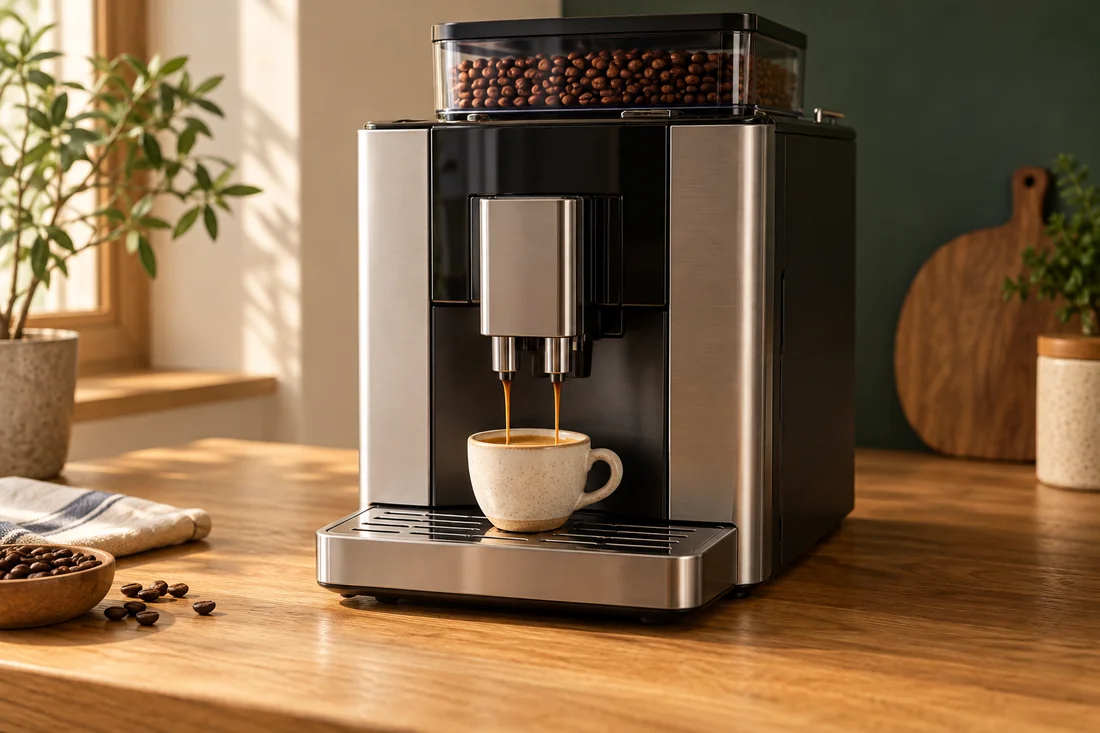
Automatic coffee machine with a cup on a kitchen counter

Knowledge you can explore

Which morning suits you?

Three views make the relationship visible. Choose a question, compare the diagram and check your understanding.

How many steps do you want?With a portafilter machine, you typically handle grinding, dosing, distributing, tamping and shot settings. An automatic machine combines several steps. What matters is which routine you enjoy repeating. Extra control helps only if you want to use it; automation also needs suitable beans, settings and regular care.01 / 030102
  1. Portafilter: individual actionsPortafilter: individual actions
  2. Bean-to-cup: combined stepsBean-to-cup: combined steps
  3. Which routine do you enjoy repeating?Which routine do you enjoy repeating?

Scroll the diagram sideways to read every label.

Make the steps visible

Schematic illustration · not a measurement or real-time demonstration

01 / 03

How many steps do you want?

With a portafilter machine, you typically handle grinding, dosing, distributing, tamping and shot settings. An automatic machine combines several steps. What matters is which routine you enjoy repeating. Extra control helps only if you want to use it; automation also needs suitable beans, settings and regular care.

02 / 03

The cappuccino is not the end

With many portafilter machines, you texture milk yourself using a steam wand. Many automatic machines use a milk system. Both require suitable cleaning. Ask to see which parts are removed and which products are used. A quick rinse does not automatically replace complete care; black-coffee drinkers may not need an elaborate milk system.

03 / 03

Compare your real routine

Write down a normal morning through to cleaning, plus a visit from guests. Check counter space, grinder needs and room to remove containers. Ask to see your usual drink prepared, ideally with everyone who will use the machine. Care products, wear parts and servicing matter as much as the first attractive cup photograph.

A quick thought check

Which demonstration helps most when choosing a machine?

01

How much do you want to control yourself?

With a portafilter machine, you typically handle grinding, dosing, distributing, tamping and setting the extraction. This gives you many ways to intervene but requires attention. A bean-to-cup machine combines several of these steps and makes repeated drinks possible at the touch of a button. Bean choice, settings and care remain important there too.

The decision is not a test of your love of coffee. If you want as few steps as possible in the morning, you can prioritise convenience. If you enjoy changing recipes, you may enjoy a manual process. Both wishes are reasonable, provided you do not buy a device for a daily routine you do not actually want.

02

A realistic look at milk drinks

With a portafilter machine, texturing milk with the steam wand is often part of your own routine. On many bean-to-cup machines, a milk system handles this. That can be convenient, but creates extra cleaning work. So look beyond the cappuccino button to the care required afterwards.

Ask about removable parts, cleaning programmes and the products specified by the manufacturer. The particular manual is authoritative. A quick rinse does not automatically replace every milk-system cleaning process. If you mainly drink black coffee, you may not need to buy a complex milk system at all.

03

Space, time and ongoing costs

Plan the actual set-up. A portafilter machine usually needs a suitable grinder and workspace alongside it. On a bean-to-cup machine, the water tank, grounds container and any milk container need to be easily accessible. Measure the space needed for removal and cleaning as well as the machine's width.

Costs include care products, filters as needed, wear parts and servicing. Research the specific model. Blanket claims such as maintenance-free are unhelpful. Every machine carrying water, coffee and possibly milk needs a reliable care routine.

04

Which drinks are your benchmark?

A small espresso cup and a large mug of coffee represent different wishes. Ask to see exactly the drink you will usually make. A long run through the same small amount of coffee does not automatically produce the result you want. Some machines have different programmes for this; check what they actually do.

If several people use the machine, they should join the comparison. Different preferences may make saved profiles or a simple shared standard useful. A device only one person can operate may be less practical in family life than expected.

05

Decide with a process checklist

Write a normal morning as a short sequence: switch on, check water, make coffee, use milk if needed, clean. Add how many drinks are needed in succession. Beside it, write the routine for guests. During a demonstration, ask to see both situations through to cleaning. This compares the work you will actually do, as well as the finished drink.

Ultimately, buy the ease of use you will actually benefit from. Extra control is an advantage only if you want it. Extra automation is convenient only if its care requirements suit you.

Frequently asked

Another question?

Does a portafilter machine automatically make better coffee?

No. Beans, settings, care and operation remain crucial.

Is a bean-to-cup machine maintenance-free?

No. Coffee, water and, where applicable, milk systems need care suited to the model.

Sources & further reading

Related to this topic

The grinder is part of the decision

Sketch a normal morning, including cleaning. Then check which grinder usefully supports that routine.

Eine passende Mühle auswählen ↗

Your coffee helper

Coffee Bro.

I help you brew, find coffee knowledge and show you what is on the menu. Your questions stay here in your browser.

Local content & guided help · no connected language model