
Milk and drinks · 3 MIN READ

Steaming plant-based drinks

Plant drinks foam differently depending on their formulation. A small comparison helps you find the right texture.

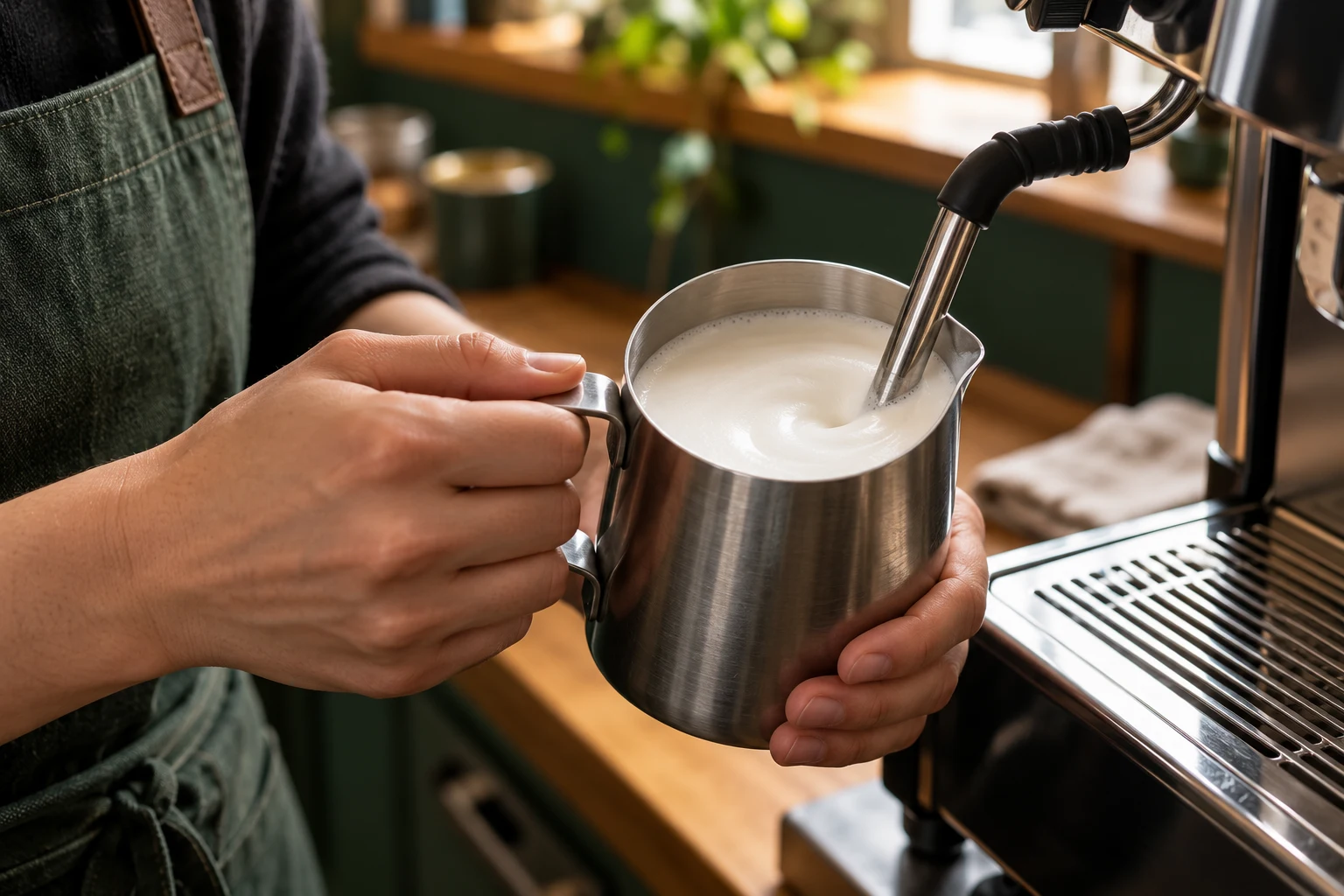
Milk pitcher at a steam wand – illustrative AI image

Knowledge you can explore

Same plant, different texture

Three views make the relationship visible. Choose a question, compare the diagram and check your understanding.

The formulation matters beyond the nameTwo oat drinks can foam differently because protein, fat, processing and other ingredients vary. Barista names an intended use but guarantees neither your favourite texture nor the best flavour. Taste the actual product alone and read its instructions for shaking, chilling and use, along with its allergen information.01 / 030102
  1. Product A: read formulationProduct A: read formulation
  2. Product B: read formulationProduct B: read formulation
  3. The plant name alone is not enoughThe plant name alone is not enough

Scroll the diagram sideways to read every label.

Formulation before plant name

Schematic illustration · not a measurement or real-time demonstration

01 / 03

The formulation matters beyond the name

Two oat drinks can foam differently because protein, fat, processing and other ingredients vary. Barista names an intended use but guarantees neither your favourite texture nor the best flavour. Taste the actual product alone and read its instructions for shaking, chilling and use, along with its allergen information.

02 / 03

Learn with a small portion

Keep product, quantity and espresso unchanged for your first comparison. Introduce air carefully, then work on a steady rolling motion. Follow any stated product temperature guidance and avoid boiling. More heat does not automatically stabilise foam. Judge texture after a short wait as well as immediately after pouring.

03 / 03

Curdling differs from large bubbles

Check freshness and smell first when something seems wrong. Pouring technique cannot rescue a spoiled product. In a fresh drink, curdling can involve acidity, temperature and formulation; large bubbles call for checking aeration instead. Clean thoroughly when switching products and consider possible contact with allergens during preparation.

A quick thought check

A fresh plant drink develops large bubbles. Which first test fits?

01

The product makes a difference

Plant-based drinks are not all the same liquid. Recipes vary in protein, fat, processing and other ingredients. Two oat drinks can therefore foam very differently on the same machine. The Barista label indicates a version intended for coffee, but does not guarantee it suits your taste or every preparation method.

Read the packaging: this includes shaking, refrigeration after opening and consumption guidance. If you have intolerances, check the ingredients and allergen information on the specific product. Plant-based does not automatically mean allergen-free, or gluten-free in every product. We are explaining preparation here, not recommending a blanket dietary alternative.

02

One small comparison instead of ten failed attempts

Start by choosing one plant-based drink and a small portion. Chill it as directed and shake the carton before pouring if recommended. Use a clean jug. Always use the same quantity and the same espresso for a comparison. Otherwise, you will not know whether the better result came from the product, the amount of milk or the bean.

Introduce air carefully. Many drinks formulated for coffee benefit from gentle aeration followed by a calm rolling motion. Where possible, follow the manufacturer's recommended temperature. If none is given, start moderately and avoid boiling. More heat does not automatically make the texture more stable.

03

Curdling, bubbles and quick collapse

If a drink curdles in espresso, acidity, temperature and formulation may interact. First check storage and the shelf-life and use-by guidance on the pack. Do not use it if there are signs of spoilage; a normal smell alone does not prove that storage was safe. If the product is in good condition, try a lower serving temperature or another formulation intended for coffee.

Large bubbles and rapid collapse are a different problem from curdling. Try less air and a more even movement. Judge the appearance not just immediately after pouring but also after two minutes. A drink is meant to be drunk, after all, and should survive more than the first photo moment.

04

Choose flavour deliberately

Taste the plant-based drink without coffee too. Some varieties have distinct cereal, nut or sweet notes of their own; others are more restrained. This influences your milky coffee. A different espresso can change the combination, but before switching beans, first vary the amount of plant-based drink. Adding less lets the coffee stand out more.

A flowing texture with fine bubbles helps with Latte Art. Even if you enjoy the drink's taste, it need not produce a competition-standard heart. First find the combination you like drinking. Record the product name, amount and a brief note on texture to guide your next purchase.

05

Keep things clean when switching

Clean jugs and steam wands consistently. A quick wipe is not a reliable solution for people with severe allergies. At home, you can plan separate containers; in a café, clearly mention intolerances. A plant-based order alone says nothing about possible contact with milk or other allergens during preparation.

Frequently asked

Another question?

Does every oat drink work for latte art?

No. Formulation and technique work together; results are product-specific.

Is a barista version automatically healthier?

No. The term mainly describes the intended use. For nutrition, ingredients, nutritional values and your individual needs are what count.

Sources & further reading

Related to this topic

Get the texture right first

Note the product, quantity and foaming behaviour. The basics of introducing air also help with your next plant drink.

Milchtextur genauer verstehen ↗

Your coffee helper

Coffee Bro.

I help you brew, find coffee knowledge and show you what is on the menu. Your questions stay here in your browser.

Local content & guided help · no connected language model